The Baltic Way

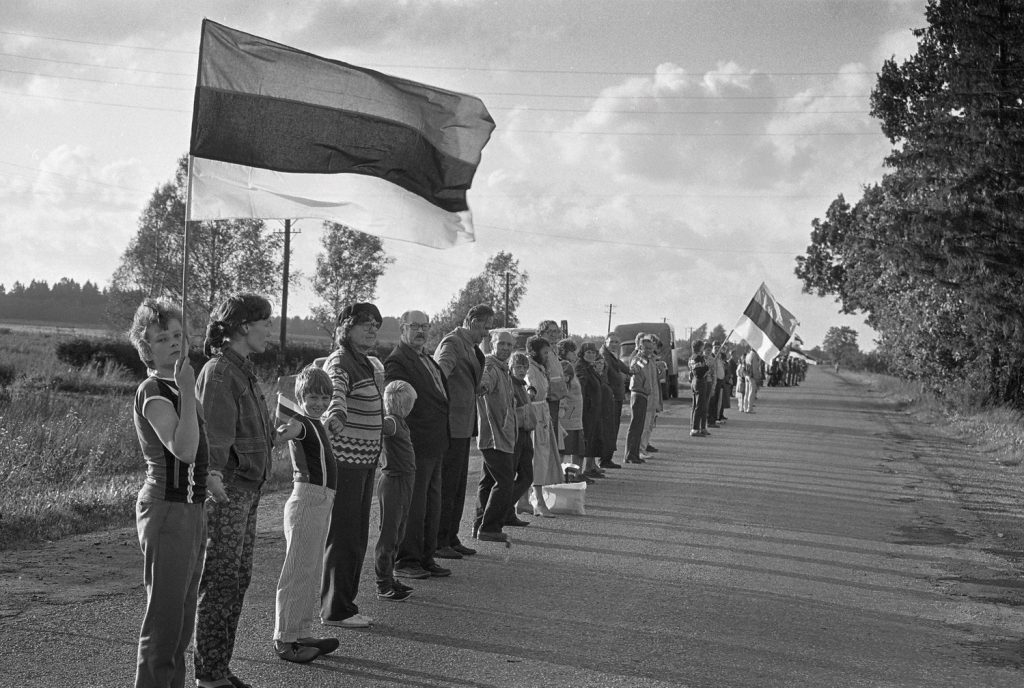
Demonstrators in Estonia join hands and wave the flag of the dissolved (but now restored) Republic of Estonia. (Jaak Künnap)

At around 7:00 PM local time on 23 August, 1989, an ambitious photojournalist finds himself in a helicopter flying over a major highway in Latvia. Peering out of the helicopter’s window with his camera in hand, he can hardly believe his eyes. On the ground below lies a massive human chain of demonstrators holding hands along the length of the road, whose ranks stretch as far as the horizon. The historic protest this photojournalist witnessed is a key moment in the history of Eastern Europe, and an important step towards dismantling the old social and political order imposed by the now weakening Soviet Union.

Known today as the three “Baltic states”, Estonia, Latvia, Lithuania were for much of their recent history, under the thumb of a larger, more powerful political entity. They were, after all, situated close to several major historical powers, including Sweden, Germany, and Russia. Still, these countries had long been adamant in preserving their national identities and cultures, even in the face of power opposition. In few other instances has this been more true than during late stages of the Baltic states’ membership in the Soviet Union.

On 23 August 1939, Nazi German leader Adolf Hitler and Soviet Union leader Josef Stalin came to an agreement known as the Molotov-Ribbentrop Pact. Under this agreement, the land lying between the two countries, which included Poland, the Baltic states, and others, would be divided into “spheres of influence” for both Germany and the Soviet Union. While Poland was split between the two rising superpowers, the Baltic states were left entirely to the Soviets. Using both military and political means to pressure them, Stalin essentially bullied the Baltic states into forming the Estonian, Latvian, and Lithuanian Soviet Socialist Republics. The process of Sovietization of the three nations included the deportation of tens of thousands of citizens which were deemed “hostile” by Soviet officials.

Fast forward fifty years from that fateful agreement and one finds a Baltic region weary of decades of Soviet control which, among other perceived violations of Baltic autonomy, included the purposeful introduction of Russian migrants (who influenced local policy in favor of the central Soviet authority in Moscow), and policies that suppressed the expression of the languages and cultures of the three Baltic nations. Meanwhile, the Soviet Union officially maintained the stance that all three nations voluntarily joined the USSR, instead of being forced to do so by Nazi or Soviet political maneuvering. Leading up to the 50th anniversary of the Pact, tensions and rhetoric surrounding reform or even independence in the Baltic states surged. These movements were condemned as harmful “nationalism” by Soviet authorities, as they prepared for a possible military crackdown on the region.

With the significance of the 50th anniversary in mind, local officials in all three nations began to plan one massive demonstration they hoped would capture the attention of the entire world. Though it is not clear who came up with the idea of a massive human chain, the concept was communicated to political and social organizations across Estonia, Latvia, and Lithuania, and a plan was approved. The chain would link Tallinn, Riga, and Vilnius, the three capitals of the Baltic nations. Organizers determined that in order for the plan to work, around 1,500,000 participants would be needed. 

According to most estimates, the expected numbers were met, and perhaps even exceeded on that fateful Wednesday evening. Along the highways connecting the Baltic capitals, demonstrators held hands and sang national hymns. The flags of all three nations flew proudly in the wind, as reporters swarmed to capture the spectacle. Solidarity demonstrations were held in cities across the world, including Moscow (although police quickly dispersed that demonstration). Though the whole ordeal lasted little more than 15 minutes, up to two million participants were estimated to have taken part in this historic demonstration, which amounted to a quarter of the total population of the three Baltic nations. 

The event was highly publicized in the media across the world, bringing international attention to the issue of Baltic independence. Though the demonstration was initially denounced by Soviet media, again claiming that the protests was little more than a manifestation of harmful nationslist rhetoric, it did cause Soviet leader Mikhail Gorbachev to reconsider the issue of Baltic independence. In December of 1989, mere months after the protest, an official condemnation of the secret protocols of the Molotov-Ribbentrop Pact was signed by Gorbachev. After free elections were held in the Soviet Union for the first time in 1990, pro-independence candidates in the Baltic countries were placed into public office. And finally, by the end of the following year, the Republic of Estonia, the Republic of Latvia, and Republic of Lithuania were established and internationally recognized as free and independent countries.

Today, the Baltic Way remains one of the largest peaceful demonstrations in history. It has been a source of inspiration for protestors in places such as Catalonia and Hong Kong, who have emulated the creation of a human chain. The independence movements of the Baltic nations contributed to the total collapse of the Soviet Union and its stranglehold on Eastern Europe. All three of the Baltic nations are now comfortably outside of the Russian sphere of influence, being members of both NATO and the EU. The Baltic countries are among the most developed and prosperous countries in the world. 
The Indonesian Genocide

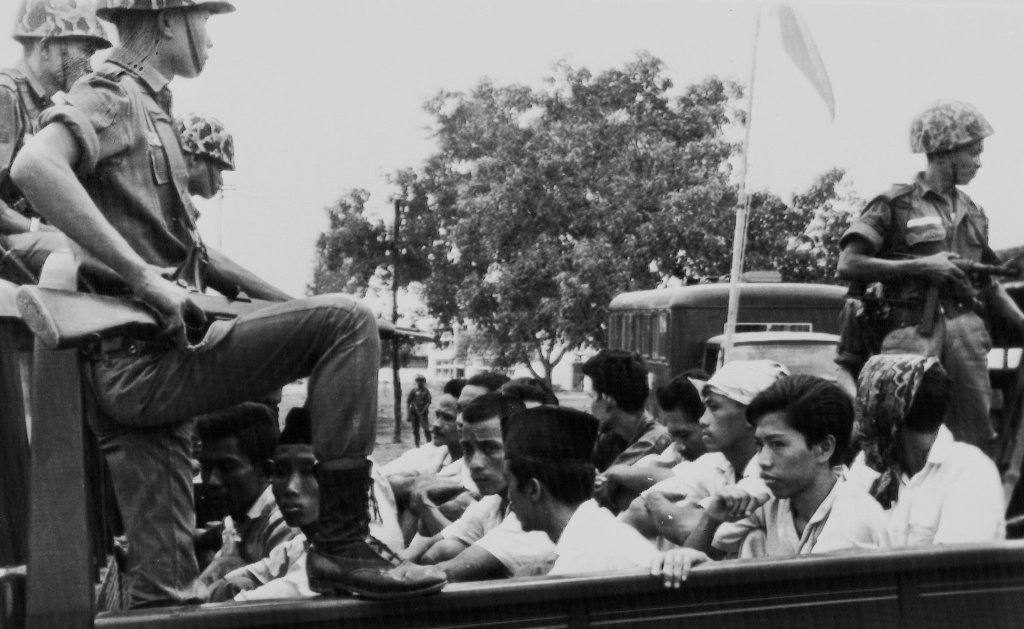
Detained members of PKI’s youth branch await their fate (The New York Times)

There were few parts of the world left unaffected by the global political and ideological struggles that occurred as a result of the Cold War. Countless nations faced both external and internal conflicts that–though often seen at the time as events solely relevant to the apparent parties–were really the result of larger machinations by the two global superpowers of the time, the United States and Soviet Union. Lives were lost, peoples were uprooted, and countries faced lasting damage to its social fabric, all in the name of power games played by those who were completely removed from the destruction they allowed and insulated by the consequences they created. In few other instances was this more true than the mass killings that took place in Indonesia in the 1960s, in which millions of suspected communists or opposition sympathizers, ethnic minorities, or even alleged religious apostates were systematically murdered by the Indonesian government. While much of the Indonesian leadership under prominent general Suharto are undeniably and hugely responsible for the atrocities that took place, the role of several Western countries who facilitated the killings due to political interests cannot be ignored.

Now the fourth largest country, in the world, Indonesia did not take its modern form until 1945. The nation’s many islands were under Dutch colonial control for well over three centuries, dating back to the lucrative spice trade that contributed to the Dutch Golden Age in the 1600s. Intense political pressure from the United States (who pushed a heavily anti-colonial agenda following WW2), as well as surging internal conflicts forced the hand of Dutch leadership, granting absolute sovereignty to the Indonesian people in 1949. However, even before receiving full international recognition, the government of Indonesia was already beginning to take form under Sukarno, a seasoned and idealistic statesman who played a major role in earlier independence movements. Sukarno would be Indonesia’s president for the next two decades, and his policies would be significant in setting the stage for the events to come. His most consequential plan was that of “Guided Democracy”, which, after being implemented in 1959, aimed to resolve the political tension that plagued the early days of Indonesia. Though Sukarno would assume near-dictatorial power, he promised that each of Indonesia’s three main factions: the nationalists, Islamists, and communists, would each have representation in his cabinet, similar to how the elder leadership Indonesian village would operate. The plan, however, failed. In the end, it was conflict between the factions that unraveled Sukarno’s Indonesia, with plenty of outside parties willing to take advantage of the chaos.

The first nail in the coffin for Sukarno came when he began an intense anti-Western political campaign, especially against the United States, which ensured that any sympathy he had from the Western bloc was now gone. Not long after Sukarno’s first denunciations of Western imperialism, a radical militant group executed six top Indonesian generals suspected of harboring pro-Western sympathies, with the impression that Sukarno himself would support them in stopping a potential coup. This incident is now known as the 30 September movement. Despite the movement’s hopes, Sukarno distanced himself from the attacks, leading many to wonder who was responsible. Suharto, the well-respected general who dispersed the militants from Jakarta’s central square, immediately blamed the PKI, by far the largest communist faction Indonesia and, with membership nearing four million, the third largest communist party in the world at the time. Nationalist, Islamic, and even Christian groups joined in blaming PKI, distributing propaganda that demonized the party. Sukarno, himself having Marxist sympathies and also wanting to keep the peace, discouraged any violence against PKI. However, with Suharto gaining influence over the army and other factions extremely quickly, Sukarno was powerless to stop the events that would soon unfold.

Beginning in 1965, with the military firmly under his personal control, Sukarno set about a brutal campaign that would claim the lives of more than one million people. The Indonesian Army, with the support of various local groups, captured and summarily executed suspected PKI sympathizers, as well as members of other factions that were deemed enemies of Indonesia. Besides the PKI itself, political groups with strong ties to the party, such as the Gerwani (The Indonesian Women’s Group), BTI (Indonesian Farmer’s Union), and even members of the PKI’s youth branch had their ranks decimated. Some ethnic populations, such as Chinese-Indonesians, were also targeted due to their suspected anti-Indonesian or pro-communist sentiments. In addition to political or ethnic groups, some units within the Indonesian military had PKI affiliations or connections to 30 September, making them targets for internal purges. It should be noted, however, that the mass killings in Indonesia from 1965 to 1966 did not constitute a civil war. Open combat between opposing factions was very rare, and the groups that carried out the violence were given complete political legitimacy.

Victims of the killings included women, children, and the elderly, all of whom met a variety of brutal ends. After being interrogated, tortured, bayoneted, clubbed, and/or shot, corpses were often left mutilated in the streets, or dumped into nearby caves or rivers. Though higher ranked PKI members or sympathizers almost always faced execution, up to 750,000 people were also imprisoned in long-term jails, some of whom were not released until the 1980s. In addition to the mass killings and detainments, damage to homes, farms, and other properties were common, leaving surviving victims with little to return to.

While Suharto’s vicious power grab is without a doubt the main reason behind the atrocities being committed, he himself was not the only one that could gain from the removal of the PKI and its supporters from Indonesia. The collapse of Sukarno’s government and the rise Suharto just so happened to occur during one of the most tense periods of the Cold War. The Western powers, particularly the United States and United Kingdom, had lots to gain if Indonesia’s massive communist supporter base were to be eliminated. Regarding the American role in the massacre, its interest in the matter was fairly obvious: an opportunity to destroy the PKI was an opportunity to ensure that Indonesia would be loyal to the United States, and hostile to the Soviet Union. Even before the walls started to cave in on his administration, the CIA sought to remove the communist-sympathetic Sukarno through a variety of means, even resorting to making a fake pornographic film that featured his likeness. But before long, Suharto was doing much of the CIA’s work (that is, killing communists) on its behalf, and American operatives were more than willing to assist in propaganda efforts that strengthened the general’s cause. The CIA provided Suharto with equipment that would aid in spreading anti-PKI sentiments among the Indonesian people, as well as hit lists that contained the names of thousands of PKI members. Meanwhile, US embassy officials offered to suppress internal media narratives about of Suharto’s massacres, in order to ensure that Suharto would be portrayed as butcher. While the US certainly played their part in facilitating the killings, they were not the only ones with a stake in the matter. The Indonesian government under Sukarno had long been in conflict with Malaysia, which at the time was a member of the British Commonwealth, and thus an valued ally to the UK. Like their American allies, British and Australian foreign officials used inflammatory propaganda to further the destruction of the Sukarno and the PKI.

In the end, Sukarno’s presidency collapsed completely, with Suharto seizing power 1967 and completely reorganizing the Indonesian government under his “New Order”. He would rule Indonesia for the next 31 years. The chief perpetrators of the mass killings were not punished, since Suharto and his top officials became the authority by which they should have punished. In 2016, an international human right’s court in The Hague ruled that the Indonesian government was guilty of crimes against humanity, while also calling out the United States, United Kingdom, and Australia as complicit in those crimes. The court in question had no actual legal authority over any of the parties in question, so those deemed responsible have yet to face any consequences. The Indonesian killings of the 1960s is both a cautionary tale to the corruption that a quest for power can create, and a call to action to make world leaders more responsible for their actions and aware of the grave consequences their decisions can have.

Morally “Ambiguous” Genocides

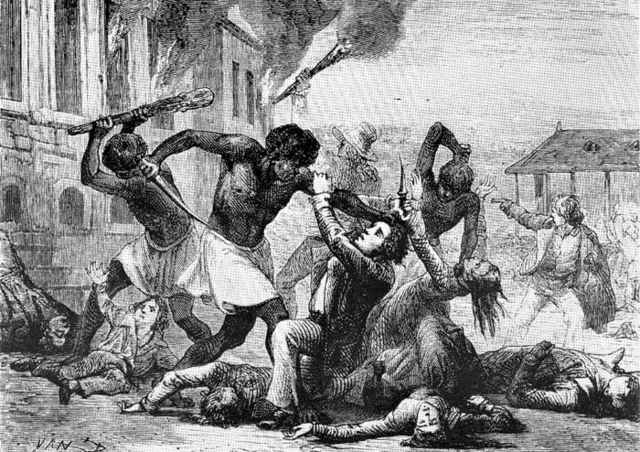
Illustration of the 1804 Haitian Massacre (Wikimedia Commons)

Genocide, in both the public conscience and international law, is considered among the worst crimes an individual or state can be responsible for. It is a crime considered perhaps unmatched in its barbarity, destruction, and divergence from the idea of global peace and tolerance. In the eyes of some, however, there are genocides whose circumstances allow a certain level of justification, or even moral plausibility. While this article will continue to condemn genocide in any form and without regard for historical context, it will examine the origins of such sentiments, and explore how they can likewise be formed in crimes with absolutely no claim to morality, except in the eyes of its perpetrators.

The Haitian Revolution, and the subsequent massacre of the nation’s white population in 1804, was an event that shocked the world, and is one example of a genocide that maintains some level of moral controversy, even more than two hundred years after the fact. Saint-Domingue, as the French colony in modern-day Haiti was then known, consisted almost entirely of sugar or coffee plantations that were owned by a small white French elite, and worked on by an African slave majority. The colony was among the most valuable in the world, producing nearly unrivaled amount wealth for the French, especially given its relatively small area. No different from their counterparts in other parts of the Americas (although work on sugar plantations were often more brutal than those producing other crops), slaves in Saint-Domingue were treated as little more than property, enduring inhumane and abusive conditions, typically leading to the death of a slave in a matter of years. In fact, by the dawn of the Haitian Revolution, the number of new slaves being imported into Saint-Domingue grew larger than its entire white population. By 1790, with only six percent of Saint-Domingue’s population being white, five percent being free people of color, and the rest slaves, it was only a matter of time before the resentment towards such a massive imbalance of power boiled over into full-scale revolution. Though the Haitian Revolution technically started as a dispute involving free people of color, lower class whites, and planters, the chaos caused by that conflict as well as the French Revolution sparked a massive slave revolt in 1791.

The Haitian Revolution developed first into a war for emancipation, then as a struggle over total control of the island between rival Haitian factions, and finally as a war for total independence from a now Napoleonic France. By 1804, this final goal was reached, and Jean-Jacques Dessalines, a prominent military leader of full African descent, was deemed Governor-General, and later Emperor of Haiti. Passionately recalling the countless acts of brutality committed by the white French plantation owners and military leaders both before and during the Revolution, Dessalines called for all whites remaining in Haiti to be put to be killed. Through the winter and spring of 1804, Haitian soldiers (often former slaves) under the personal supervision of Dessalines marched between Haiti’s cities and massacred up to 5,000 white civilians. By April, Dessalines’ goal of a complete removal of whites was met, with the only full whites remaining in the country being women married into black families. The events of 1804 made slaveowners in other parts of the Americas–especially in the American South, where many surviving Haitian planters fled to–concerned about a similar event happening on their own plantations. As these white American or European leaders condemned what they viewed as barbarity, Haitian leadership defended the massacre as a necessary act of justice and retribution, an idea which persisted long after the last bullet had been shot.

From C.L.R. James’ 1938 historical account of the Haitian Revolution, The Black Jacobins

“The massacre of the whites was a tragedy; not for the whites…. for these there is no need to waste one tear or one drop of ink.”

James and others sympathetic to Dessalines’ actions cite the generational cruelty inflicted by the whites on Saint-Domingue, the brutal, scorched earth tactics used by French forces during the Haitian Revolution, and the threat of counterrevolution, all as factors that ultimately justify the 1804 massacres. Regardless of what opinion they actually have, readers will certainly see how these factors are, to an extent, sufficient in justifying the actions of Dessalines and his men. What is more important, however, is recognizing how the core principles that justified in the 1804 Haiti Massacre are seen in instances of genocide whose evil and senselessness are seldom contested.

Let us now look at the most famous of genocides, the Holocaust, a crime which no reasonable person would ever defend as just or necessary. After WW1, Germany was left humiliated by its defeat, becoming as politically and economically weak as the relatively new nation had ever been. From a desire to restore German dignity and standing in the world, rose the Nazi party under Adolf Hitler, and the establishment of the Third Reich. Besides the unfair Versailles Treaty given to them by the Allied Powers of Britain, France, and others, Nazi ideology blamed various groups within German society for their failures. No group was blamed to a greater extent than Jews, whom the Nazis claimed sabotaged the efforts of Germany in favor of promoting their personal and political interests. This element of blame was key, since there was a sense that not only should the Jews be removed for the betterment of German society, but that the expulsion or extermination of Jews was a righteous act of justice and retribution for the crimes they had committed against the nation. So, despite clear evidence that no such Jewish conspiracy existed, and that German Jews had served as heroically in WW1 as their “Aryan” counterparts, the emotional satisfaction the Nazi ideology and plan of action offered to the German people was sufficient in allowing the Hitler and his party to take power.

In the case of the Haitian Massacres and the Holocaust, though different in many ways, the two seem to have in common one key idea: that they were justified by the perpetrators as an act of justice, rather than a crime. During the Haitian Massacres, Dessalines and his sympathizers justified the slaughter of thousands of civilians by reminding the people of Haiti the atrocities they had faced at the hands of the white planters. The Nazi propaganda machine made similar claims about the Jews: that the suffering and weakening of the Germans was to be blamed on the acts of sabotage and treachery done by Jews, or other groups which the Nazis wished to exterminate. In predicting and preventing future acts of genocide, the international community must watch for countries whose social conditions may generate a similar situation to that of Haiti or Nazi Germany; that is, countries in which a controlling group may be in a position to blame a potential victim group for certain wrongs, however justified that blame may be.

Fatime al-Fihri and the University of al-Qarawiyyin

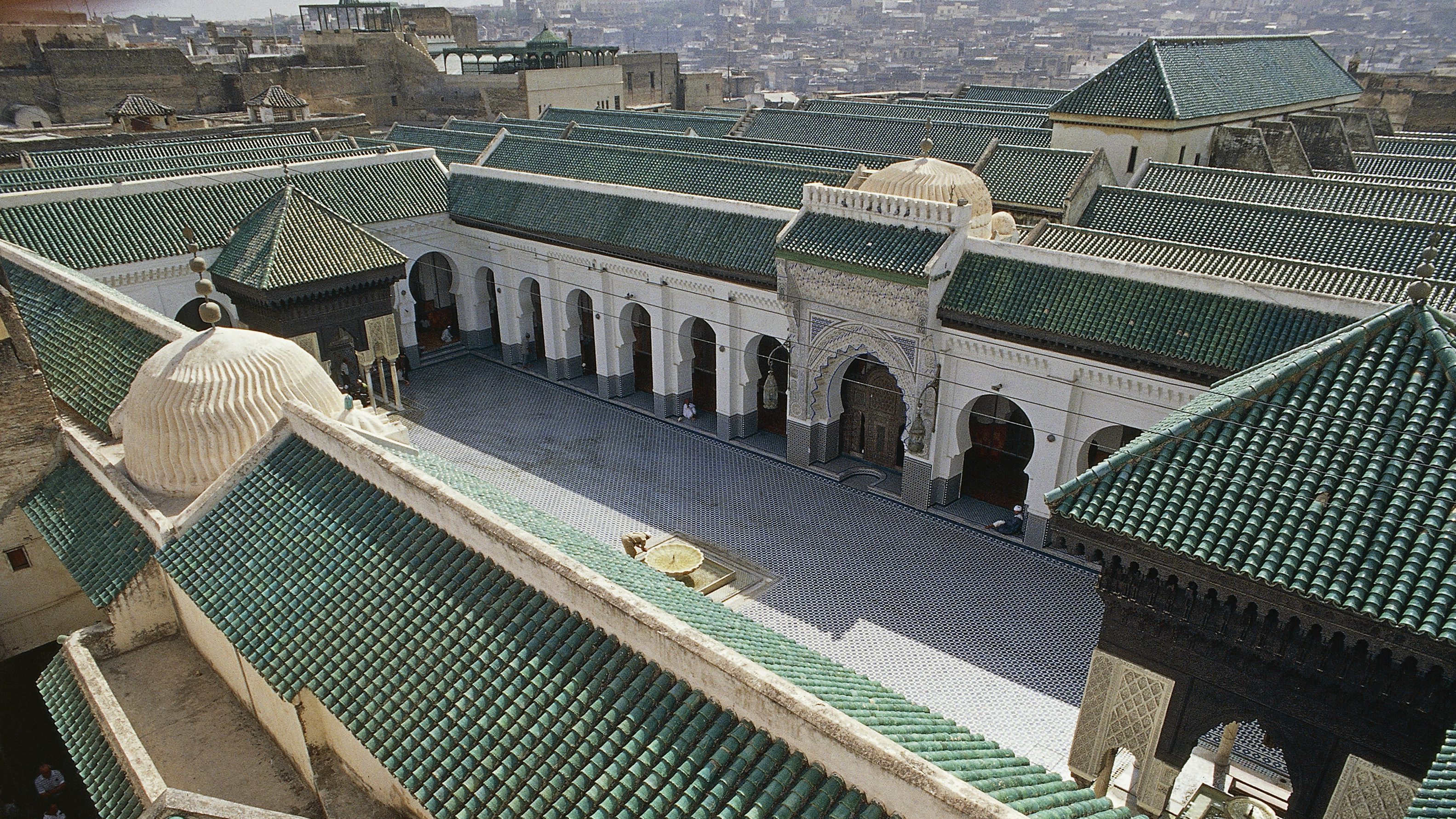
University of al-Qarawiyyin in the afternoon (CNN)

Places of higher learning have long been the backbone of history’s most prosperous civilizations. From the Platonic Academy of Athens to England’s University of Oxford, these centers of learning serve not only as a meeting place of different ideas and great thinkers, but as enduring cultural icons for the people they serve. But one university, considered to be the oldest of them all, comes from a seemingly unlikely place, and an even more unlikely person. Nestled in the old walled district of Fes, Morocco, the University of al-Qarawiyyin, in addition to holding Earth’s oldest known library, is considered by many to be longest continuously operated place of higher learning the world. Though the exact period when it began teaching is uncertain, it is generally presumed that instruction began shortly or immediately after its founding as a mosque in 859 CE. Its founder, an ambitious yet benevolent heiress named Fatime al-Fihri, created al-Qarawiyyin as a religious and educational meeting place for Fes’ diverse populace. Today, the university is still an iconic landmark of the former Moroccan capital, and is one of the nation’s most respected academic institutions.

Though few details of her early life are documented, Fatime al-Fihri is considered to have been born at the beginning of the 9th century CE in Tunisia. Her father, Muhammed al-Fihri, was a successful merchant who left a considerable fortune to Fatima and her sister, Maryam. Before his passing, however, the Muhammed al-Fihri and his family moved from their village in Tunisia to the city of Fes in search of a new life. Fes was a bustling city that was a blend of North African, Arab, and European cultures, due to migration being fairly common at the time. As a result, both of the al-Fihri sisters grew up in an environment surrounded with people with vastly differing origins. As the sisters grew older, both realized that the rapid flow of migrants, especially those coming from Spain, were beginning to crowd many of Fes’ mosques. As a result, both used a significant share of the wealth inherited from their father to found mosques that would be open to people of all backgrounds. While Maryam’s al-Andalusiyyin Mosque, also called the Mosque of the Andalusians, is known throughout Fes, Fatime’s al-Qarawiyyin is one the premier sites in all of North Africa. Motivated to create a place of learning in addition to its function as a place of worship, Fatime was thoroughly involved in al-Qarawiyyin’s entire construction process. And, according to some sources, she fasted throughout the 18 year build, further proving her dedication to the project.

Finally, in 859, al-Qarawiyyin opened its doors to the world. Though initially similar to many large mosques at the time, where educational functions were included to supplement the building’s main religious purposes, al-Qarawiyyin soon became a fully fledged educational institution. As the centuries passed, the university’s curriculum broadened, peaking around the 13th and 14th centuries. In addition to its specialization in religious studies and Islamic law, the university expanded its scholarly work into astronomy, mathematics, philosophy, and geography. This period, during which Morocco was under the rule of the Marinid Sultanate, was also considered to be near the height of the Islamic Golden Age. The Golden Age, a period of rapid cultural, scientific, and intellectual advancement, was far different from the European Dark Ages often associated with the period in Western history.

Though the Islamic Golden Age applied to the many nations and empires throughout the Muslim world, the University at al-Qarawiyyin is no doubt a large part of the legacy left behind by this bright period of human advancement. Its alumni reflect the success of both the Muslim civilizations at the time, and Fatime’s original goal of making it a place of true cultural and intellectual exchange. Early forms of algebra were first developed at al-Qarawiyyin, and some even claim that Pope Sylvester II first introduced Arabic numerals to Europe after a brief visit the university. Maimonides, who attended the university some time in the 12th century, went on to become of the most renowned Jewish philosophers and Torah scholars of his time. Ibn Khaldun, one of the most accomplished social scientists of the Middle Ages, is one of many prominent Muslim scholars who studied at the university. His careering spanning the latter half of the 14th century, Khaldun made tremendous strides in political science, history, and economics, and continues to gain the recognition of scholars across the globe today. Finally, famed explorer, merchant, and diplomat Leo Africanus grew up in Fes and studied at al-Qarawiyyin as a young man in the early 16th century. Following his time at the university, his many adventures (which included being sold into slavery and later baptized by the Pope himself) culminated in the production and widespread printing of Description of Africa, which remained the most comprehensive work on the subject until the 19th century.

As Fes, Morocco, and the entire Islamic world began to decline from its former glory, al-Qarawiyyin began to show its age. Its collections were greatly reduced, as was the breadth of its teachings. Subjects such as astronomy and medicine were struck down entirely. As Morocco became under French control in 1912, the university continued to suffer, with many of the country’s elite instead being sent to Western-style colleges either elsewhere in Morocco, or to France itself. However, after regaining independence, the Moroccan government added al-Qarawiyyin to its state university system in 1963, giving it adequate support to continue operation as a multi-disciplinary university.

Be it through students walking through the university’s ornately decorated tile hallways, or through distant passersby admiring the mosque’s silhouette on the Fes skyline, the legacy of Fatime al-Fihri lives one through her commitment to advance humanity through connection and learning.

Mythical Origins Part I: Japan

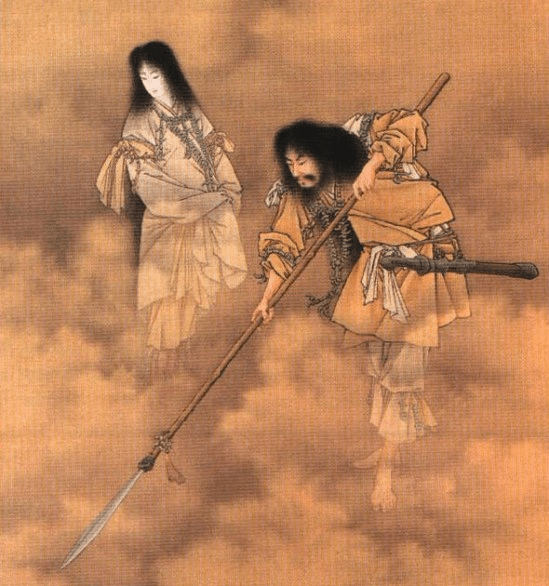
Izanami stands as Izanagi dips the Amenonuhoko into the sea (MFA Boston)

“Myths are things which never happened, but always are.”

Salutius, 4th century CE

Every civilization in the history of the Earth has a story of who they are, and how they got there. While few of these could ever be verified by historical or archeological fact, even the most unlikely of origin stories can impact a society just as much, or even more, than if the story was certain to be true. This series will provide a brief outline of the mythical origins of a handful of civilizations, and draw historical connections between those myths and the peoples it served, or continues to serve, as a foundation to. As a whole, the series will attempt to highlight that in history, myth and fact can go hand-in-hand, and that the line between them is not always clear, nor relevant in shaping humanity.

In the beginning, there was only chaos; the world a formless disarray of nothing and everything at the same time. From the disorder emerged a dichotomy between two opposing ideas: Heaven and Earth, with the divide between the two being apparent in all worldly and spiritual things.

Japan’s creation myth is similar to others such as the Ancient Greeks or Hawaiians, who generally believe that the universe was created from chaos; that the things that made up the universe were initially or always existent, though disordered, and were then reorganized into universe we see today. Creation from chaos myths are distinct from other categories of creation myths, such as creatio ex nihlio (Latin for “creation from nothing”): the belief in a single intelligent being creating the universe from nothingness.

Takamagahara, the abode of the heavenly gods, was the first thing created from the chaos. Emerging from the primordial oil and now living in Takamagahara were the three original creation gods: Amenominakanushi, Takamimusubi, and Kamimusubi. Seven generations of deities were born from these original three, with the final generation consisting only of brother Izanagi and sister Izanami. The two were gifted were a sacred jeweled naginata (a traditional Japanese spear) at birth. The siblings, now standing on the bridge between Heaven and Earth, stir the sea with their naginata, creating the Earth’s first islands from the droplets that fell from the spear’s tip, and finally descending from Heaven to live on them. Before long the two realize their anatomical differences, and organize a marriage ceremony around the pillar of Heaven. Their first set of offspring are severely deformed, which they determine, after some discussion with their dead ancestors, is a result of Izanami speaking first during the ceremony instead of Izanagi. The couple redo the ceremony, this time successfully abiding by their respective roles.

The naginata, central to Japan’s creation myth, is also central to the nation’s military history. A versatile weapon—something between a sword and a lance—was used by everyone from samurai to warrior monks. Meanwhile, the pillar of Heaven, around which the wedding takes place, is replicated with the central pillars common in buildings constructed during the Yayoi period of Japan (300 BCE–300 CE). With regards to Izanagi and Izanami’s relation to each other, it is important to note that there is a level of ambiguity within certain Japanese words for “wife” and “little sister”, so scholars continue debate whether or not they can be considered related by blood. Lastly, the story about Izanami’s botched role in the ceremony reflects Japan’s traditional gender roles and historically conservative attitude towards women, as well as the Confucian philosophy on gender roles which influenced virtually all of East Asia and beyond.

The renewed union between Izanagi and Izanami results in a new set of offspring, which take multiple forms. These include new islands, geographical features such as forests and mountains, and even more gods. Finally, Izanami dies in childbirth after she gives birth to her most volatile creation, fire. A complicated saga ensues after her death, which actually results in permanent rift between couple. Izanami, now a resident of the underworld, threatens to condemn thousands of mortals to death unless her husband backs off, while Izanagi promises to do the opposite by creating an even greater number of births, thus creating the cycle of birth and death. Meanwhile, the original couple themselves aren’t the only ones having problems with each other; so are the many gods whom they created. After Susano’o, the storm god, gets into a quarrel with his sister, the sun goddess Amaterasu, the latter locks herself into a cave, plunging the world into darkness.

The new islands described as being created by Izanagi and Izanami align well with the islands of Honshu, Kyushu, and the other major islands that make up Japan. Amaterasu locking herself in the cave likely corresponds with a real life natural disaster, such as an eclipse, or perhaps the infamous year 536 CE, in which most of the world, not just Japan, experienced massive crop failure probably due to a volcanic eruption which created an ash cloud that blotted out the sun.

If all of this sounds confusing and disconnected, that’s because it is. Although Japan is considered a culturally homogenous country, that was not always the case. Its ancient peoples consisted of small independent tribes and chiefdoms, whose various myths and legends eventually culminated in an only somewhat cohesive narrative of Japanese mythology. It was not until long after these myths were created, well into the first millennium CE, that surviving records of these myths are found. The many myths that can together be considered the creation myth of Japan are a mostly a compilation of the many disputes, affairs, and fights between the gods. Many of these myths would follow a pattern such as this: a few gods get into trouble with one another, they start fighting, and something important is ultimately created as an unintended result of the fighting.

Out of the mishmash that is Japanese mythology, the two most direct and tangible legacies of the Japanese creation myth are the Shinto religion and the alleged origin of the Japanese imperial family. Shinto is considered the indigenous religion of Japan, and has existed in some form since even before the Common Era. Blending elements of Japanese folk traditions (including its mythology) and Zen Buddhism, the religion is an important symbol of Japan, influencing many of the nation’s most iconic traditions, historical events, and architecture. The semi-mythical beginning of the Japanese imperial family can also be traced to the country’s founding myths. According to legend, the aforementioned sun goddess Amaterasu—herself a descendent of Izanagi, Izanami and the original three gods—had an extensive and documented lineage of her own. Five generations below Amaterasu lies her great-great-great-grandson, Jinmu, who is considered to be the first emperor of Japan. 126 generations later, the family tree arrives at Naruhito who, although stripped of all but ceremonial powers, is the current emperor of Japan. Thus, if one were to directly trace the lineage of Naruhito as far up as the records allow, Naruhito can be considered a direct descendant of the original heavenly gods. Many readers will no doubt be familiar with fanatic acts, such as piloting a kamikaze airplane, being done in the name of Japanese emperor. These could be paralleled to acts of religious fanaticism, since both consider their actions as vindicated by the divine.

Japan is a unique nation that was formed from unique circumstances. Its mythical origin reflects the values and customs that has transformed the country from a few tribes inhabiting a handful of islands to an enduring economic and cultural power that has influenced the entire world.

The Brazilian Expeditionary Force

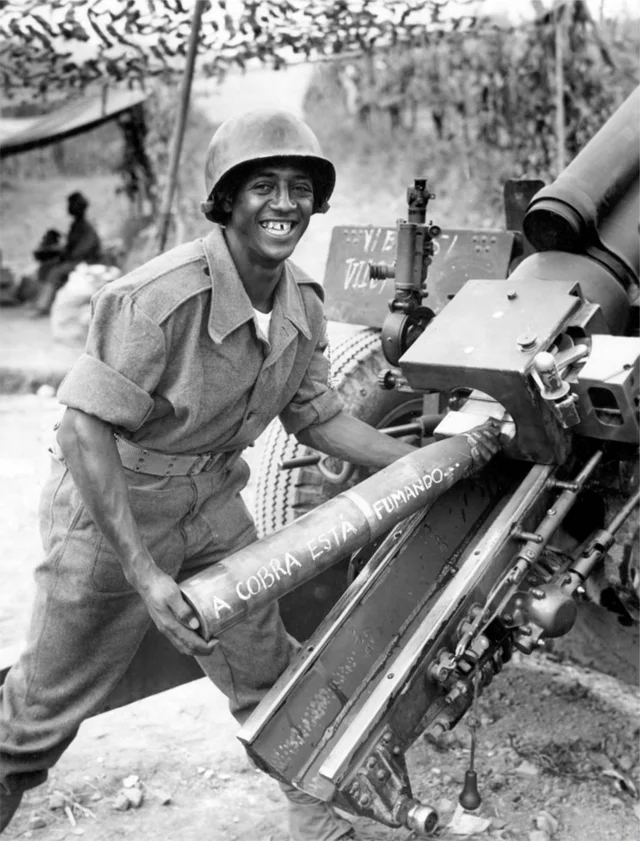
FEB soldier loads artillery with shell inscribed with A COBRA ESTÁ FUMANDO; THE SNAKE IS SMOKING (Getty Images)

The Second World War is a conflict well catalogued and studied by high school students, history buffs, filmmakers, writers, and scholars. But as significant and consequential the war was to every corner of the world, there would inevitably some stories that would be forgotten by its popular history. One such story, at least outside of South America, is that of the 25,000 man-strong Brazilian Expeditionary Force (Força Expedicionária Brasileira, or FEB).

Prior to their entry into the war, Brazil had been a valuable trading partner to the Allied powers, and even allowed the United States to construct air bases on its soil. Eventually anti-Axis sentiments began to mount as Brazilian merchant ships were sunk by German U-boats, and in August of 1942, Brazil declared war on the Axis powers. Initially, Brazilian support to the Allies was no different from that of other South American countries — providing much-needed war material by becoming a key link in the supply chain across the Atlantic and into Africa. However, Brazilian leaders soon realized that by sending an actual military force to the Allies’ aid, it would be a symbolic commitment to their cause, and improve their position at the negotiation table once the war came to an end.

In addition to its main infantry division, the FEB also included a fighter squadron, and was supported by the Brazilian Navy. In the summer of 1944, the first Brazilian troops arrived in Naples, merging itself into a larger American force that was already fighting a brutal campaign in Italy. Their nickname was the Cobras Fumantes (“Smoking Snakes”), after it became a running joke that it was more likely for a snake to smoke than it would be to see the FEB to see any actual combat.

From the memoirs of Mark Clark, commander of the U.S. Fifth Army:

The Performance of the Brazilians was, of course, important politically as well as militarily. Brazil was the only Latin American country to send an expeditionary force to take part in the European war, and, naturally, we were eager to give them a chance to make a good showing.

While the small force was not hugely impactful when considering the massive scale of military operations during WW2, they were nonetheless remembered in the hearts and minds of the Brazilian people. Perhaps the greatest of these victories was at the Battle of Collecchio, in which the FEB surrounded and captured two German infantry divisions on April 29, 1945, just days before the fall of Berlin, the collapse of Nazi Germany, and the end of the war in Europe.

The legacy of the FEB in Brazil can be considered somewhat complicated, especially considering the various roles FEB veterans played during the 1964 Brazilian coup d’état. However, it can generally be said that the Brazilian Expeditionary Force is an enduring symbol of national pride for Brazil, and serves as testament to the bravery and dedication of countless of individuals during WW2, particularly by countries who roles in the war are not as well known.

Afro-Turks

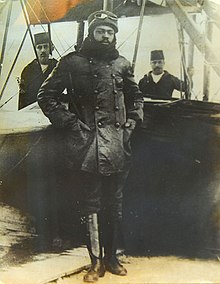
Ahmet Ali Çelikten, the first Black pilot in world history, who served in the Ottoman Air Force during WW1 (Wikimedia Commons)

Many of our readers will be well aware of the Atlantic Slave Trade, in which the colonial powers of Western Europe imported West African slaves to their territories in the Americas. They will also be aware of the massive diaspora of persons of African descent in these places as a direct result of this. From communities who are minorities within their respective countries, such as African-Americans or Afro-Brazilians, to countries which are majority Black African such as Jamaica or Haiti, these groups exist under a shared national and racial identity, despite the unfortunate circumstances of their ancestors.

A lesser known, but still strong African diaspora can be found on the western coasts of Turkey: the decedents of those brought to the country through the Ottoman slave trade. As a result of bans on the enslavement of Muslims, Jews, or Christians (people deemed more favorable in the predominately Muslim empire), the eastern African coasts became a popular place to import slaves from. While the sheer volume of slaves imported certainly did not much that of the aforementioned Atlantic slave trade, it is estimated that the total number of people taken from Africa is in the hundreds of thousands, possibly over a million*. These slaves, not unlike their counterparts from around the world, were employed in a variety of roles, including domestic work in their master’s homes, agricultural work on plantations, or serving in the Ottoman military. Sexual slavery was also quite common, as was general abuse towards slaves and those of African descent.

In the decades following the collapse of the Ottoman Empire and the ban on slavery in its succeeding countries, the struggles of the Afro-Turk continues. Racism against Afro-Turks have drawn a line in the sand between them and the rest of turkey, and consequently caused many Afro-Turks to question their identity of who they are, and where they came from.

Via Alev Scott of the BBC (2016)

Afro Turks are nominally Muslim, with nothing to differentiate them from most Turks apart from an evidently different ethnic makeup. But as a prejudiced ethnic minority, they have tried over the generations to integrate as much as possible.

Many parallels can be drawn between the experiences of Afro-Turks and those of the more well-known African diasporic communities in the West. By examining the common themes of the many varying diasporas from around the world, we can begin to examine what it means to belong to a nationality, race, culture, or people.

*does not include Ottoman slaves previously taken from other parts of the world, such as the famed Janissaries.