
The Suicide of Danny Chen

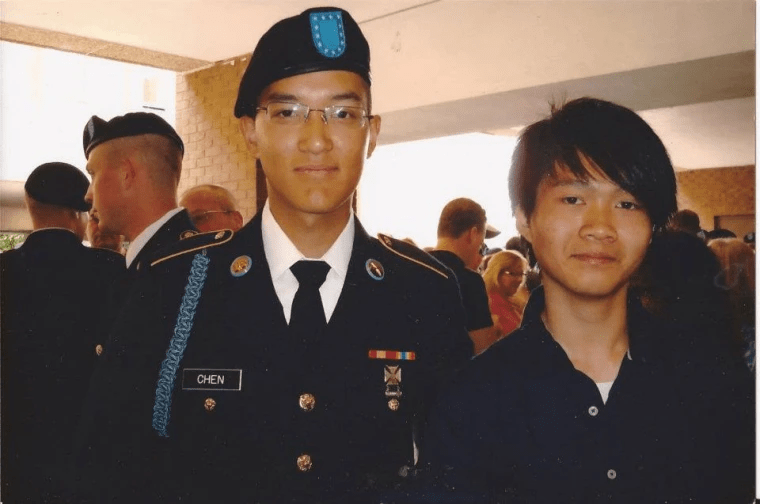
Danny Chen (left) with his cousin after completing basic training in Fort Benning, Georgia (NBC News) Chen would die by suicide six months after this photograph was taken.

Walk far enough along Canal Street through the heart of Lower Manhattan’s Chinatown, and you will eventually find a notable street marked with two different names: Elizabeth Street and Private Danny Chen Way. A quick Google search will reveal the tragic story of the road’s secondary namesake. Private Danny Chen died by suicide in Afghanistan after receiving intense racial abuse at the hands of his fellow soldiers. Chen, hailing from the very same neighborhood, was honored by his Chinatown community shortly after his untimely death. While the practice of naming landmarks after fallen soldiers is by no means unique, neither is Chen’s story of facing racism within the ranks of the United States military. Since Washington’s initial refusal to enlist Black soldiers in his Continental Army, racism in the American armed forces have been a notable subtopic within the larger study of American race relations. Though significant progress has been made since the country’s first battles, recent incidents such as the suicide of Danny Chen have drawn concern to the status of racial minorities in the military, as well as how incidents of racial abuse should be addressed, especially when the abusers have direct authority of the victim.

Born in 1992 in the largest overseas community of ethnic Chinese in the world, Danny Chen grew up similar to many of his peers. His mother was a seamstress and his father was chef, both of whom immigrated from Taishan, China. Chen was the tallest in his family, standing over six feet tall. He was bright, social, and devoted to his family. He worked hard both in and out of school, and was considering attending Baruch College, from which he received a full scholarship offer. However, as his high school days came to a close, his interests shifted, considering a career in the military instead. He planned to enlist in the Army, and dreamed of later becoming an officer for the NYPD. His family, on the other hand, were not so enthusiastic about his new goals. Him being his parents’ only son and child, they hoped he would pursue a safer career by getting his college education, believing that he had a bright future. In the end, however, Chen chose to pursue his dream of serving his country and community, and enlisted in the military shortly after graduating high school.

Chen first reported for basic training in Fort Benning, Georgia, where he got his first taste of military life. Like many new recruits, Chen was eager for the weeks ahead. He wrote to his parents often, describing to them how toilet paper was particularly rare on base, or how intrigued he was when shot a gun for the first time. But as time went on, and the stress among his fellow recruits mounted, his attention was increasingly called to a peculiar fact: he was the only Chinese man in his platoon. Week after week, recruits would call him “chink”, “Ling Ling”, and a variety of other racial insults. While the words themselves did not bother him, it become more and more apparent that he was being singled out within his platoon due to his race. At the time of him joining, Asians-Americans of any background made up just four percent of the entire US military. This fact, in addition to being the first in his family to join the military, made it so Chen had no one to turn to, and had to handle the situation without anyone truly on his side. Chen was a rather shy and unassuming figure, and tried to deflect the verbal abuse as best he could with humor. In the end, Chen was able to survive basic training, and in April 2011, he was assigned to the 21st Infantry Regiment of the 25th Infantry Division, based in Fort Wainwright, Alaska.

While his status as the only Chinese in his platoon did not change, he tried to make the most out his situation in Alaska. After his expected deployment to Afghanistan was delayed, Chen spent his time with friends in and around base, hoping to overcome that barrier which seemed to always divide him and his fellow soldiers. But in August 2011, after months of impatiently waiting, he and his unit were finally deployed into Kandahar Province, Afghanistan. As eager as Chen was to serve his country and prove his worth, the racial abuse, coupled with extreme hazing, only become worse. He was berated constantly with racial slurs, and was even forced into communicating orders to his comrades in Taishanese, the Chinese dialect of his parents. He was frequently singled out for extra guard duty, to the point where he would fall asleep on the job, and would be brutally beaten by his fellow soldiers as punishment. In one incident, Chen was dragged naked across 50 feet of gravel after misusing a water heater. Chen’s final day of service would be similarly humiliating. On October 3, 2011, he forgot his helmet for guard duty, leading to him be pelted by his platoon with rocks as he forced to crawl back to his trailer to retrieve it. Other soldiers observed that Chen seemed hardly phased by the ordeal, until the truth revealed itself later than morning, when Chen, age 19, was found dead from a self-inflicted gunshot wound to the head.

Of the eight men charged with Chen’s death, they officially served a total of 11 month in prison. The majority of the accused, including the lieutenant who commanded the platoon, had their charges dropped, or received no sentence and were instead demoted or discharged.

Chen’s death was not the first of its kind. Hazing in the military, especially against soldiers belonging to racial and ethnic minorities, as long been of concern. Around the same time Chen completed basic training, a Chinese-American marine named Harry Lew committed suicide in Helmand Province, Afghanistan after being beaten and having sand thrown in his face by a superior. Five years after Chen’s death, Pakistani-American marine recruit Raheel Siddiqui jumped off of a bridge after receiving abuse at the hands of a drill instructor with an established history of mistreating Muslim-American soldiers.

As racial discrimination reports continue to be received from concerned soldiers, many are troubled about how the culture of the military should adapt to an ever increasing diversity in the among its ranks. While history has shown the ugly side of American race relations across many of its institutions, it appears that within the United States Armed Forces, the concerns of the past continue to be felt in the present.
The Rhodesian Bush War: Causes and Legacy

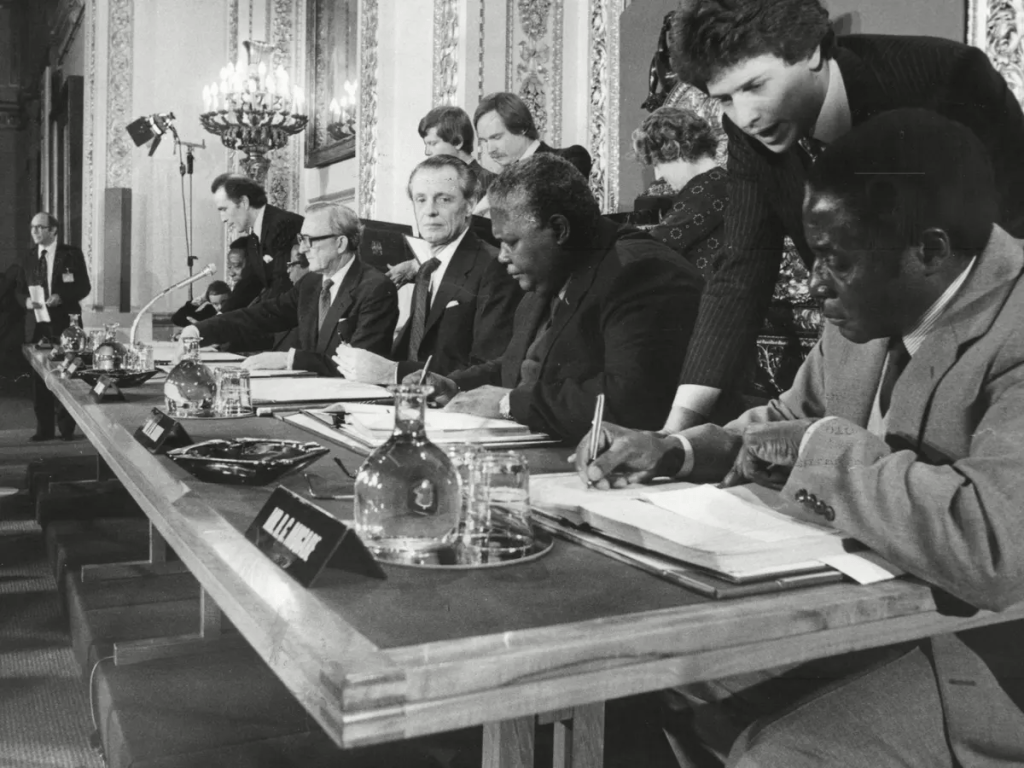
Key officials agree to the terms of the Lancaster House Agreement, the peace agreement that would lead to the full independence of Zimbabwe (The Guardian)

By the midpoint of the 20th century, the old colonial empires of Europe were beginning to come apart. The aftermath of the Second World War had ushered in a new era of peace, and created a growing distaste towards imperialism and nationalism as a whole. The part of the world most affected by centuries of colonialism was the continent of Africa, which, with few exceptions, was at one point the territory of one European nation or another. Africa’s transition into its post-colonial era is one full of triumph and tragedy, and is a process that arguable continues to this day. Perhaps the best known story from post-colonial Africa is that of South Africa, whose peaceful transition from apartheid-ridden colonial state into a (somewhat) fair and equal democracy inspired much of the world. However, today’s story will revolve around its neighbor to the north, the former British colony of Rhodesia, and the country it is today known as: Zimbabwe.

Though the lands that eventually became Rhodesia/Zimbabwe were occupied by a variety of peoples, it was primarily ruled by the Ndebele Kingdom, a breakaway tribe from the Zulu people to the south. The Ndebele were founded by Mzilikazi, himself a Zulu general under the famed King Shaka Zulu. The Ndebele would soon grow very powerful, and by the time European’s arrive at their door, they ruled the many tribes of Zimbabwe under a tribute system, including the Shona people who were previously the dominant force in the region. The divisions between the Shona and the Ndebele would continue well after the latter came into power in the mid-19th century. In 1888, after several years of British presence in the area, the British South Africa Company (BSAC) under the cunning, imperialist, white supremacist tycoon Cecil Rhodes began its rule over Zimbabwe. Mzilikazi’s son and successor, King Lobengula, agreed to a deal with Rhodes that would concede mining rights to BSAC. Rhodes subsequently used the concession to obtain a royal charter from the British Crown, and solidify the region as a British colony. The new territory owned by BSAC was named Rhodesia, whose namesake was, not surprisingly, Cecil Rhodes himself. White settlers soon flooded into Rhodesia, while its native people, Shona and Ndebele alike, were forced onto “tribal trust areas”, which filled a similar role as North American Indian Reservations. Treated as second class citizens in their own homes, the tensions between black African and white British factions is a common theme in many former European colonies on the continent, and was certainly the case in Rhodesia.

In 1923, the colony, now called Southern Rhodesia to differentiate it from the newly created Northern Rhodesia (now Zambia), officially became a self-governing colony of the British Empire, making the colony effectively independent as state, but still technically under British rule. Following the Second World War, the British government (in accordance with its decolonization policy) pressured Southern Rhodesia to end its minority rule of the country, and expand suffrage to its black African population. The colony was ruled entirely by its 80,000 whites, while its 2.5 million blacks still lived essentially as colonial assets. Not wanting to give up its control domination over the country, the white leadership of Rhodesia (switching back to its old name since Northern Rhodesia had already become Zambia) declared independence; a shocking move that was technically the first of its kind since the American Revolution. The new nation of Rhodesia, under Prime Minister Ian Smith, was now totally independent, though it did not receive any real international recognition. Rhodesia received harsh economic sanctions and condemnations not just from the British, but from the entire international community.

In 1964, shortly before Rhodesia’s Universal Declaration of Independence (UDI), the conflict now known as the Rhodesian Bush War began with a minor skirmish involving Rhodesian forces and one of the two emerging, Marxist, African nationalist groups. Formerly one entity, these two disparate parties were the Zimbabwe African People’s Union (ZAPU; its military wing named ZIRPA), and its breakaway group the Zimbabwe African National Union (ZANU; its military wing named ZANLA). The generations-long division between the Ndebele and Shona peoples was key to the split, as the two ethnic groups controlled ZIRPA and ZANLA, respectively. Throughout the war, ZIRPA and ZANLA would occasionally fight each other to gain better regional control. Opposite both of these factions was the Rhodesian Security Forces, a well equipped, professional army that had considerable air power, its own SAS special forces unit, while consisting of both white and black units. ZIRPA and ZANLA, having both being expelled out the country and into Zambia, conducted the first phase of the war (1964-1972) through a number of battles through and along the Zambian border. The Rhodesians thoroughly defeated the rebels in this first phase, even becoming confident enough to release rebel leaders such as Robert Mugabe, who they deemed to no longer be a threat.

However, as the Rhodesians were celebrating their apparent victory, both the ZIRPA and the ZANLA weren’t just licking their wounds, but were also gearing up for the second phase. Due to the involvement of communist and non-communist factions, Cold War politics inevitably found their way into the conflict. United States covertly supported Rhodesia due to the Rhodesian Front’s strong anticommunist sentiments, while South Africa provided ground forces to fight alongside them. But more importantly, the ZIRPA was strongly backed by the Soviet Union, while the ZANLA received support from the People’s Republic of China. The advisors and resources provided by their strong allies allowed the insurgents a tremendous advantage coming into the second phase (1972-1979). ZANLA’s relocation to Mozambique also meant that the Rhodesians also needed to fight along the Mozambican as well as the Zambian, further worsening the situation for Ian Smith’s government. As South Africa pulled out the conflict, and more insurgents entered the country, the situation for Rhodesia became desperate, with the Rhodesian Security Forces even resorting to using deadly chemical and biological weapons. In soon became clear that white minority rule was no longer possible, and a gradual political transition was attempted, which led to the election of the first black prime minister and president of a newly named, but short-lived state, Zimbabwe-Rhodesia. But for the warring ZANU and ZAPU, it was still not enough, and fighting continued until the Lancaster House Agreement in December 1979. The agreement, brokered by the British government under the newly incumbent Prime Minister Margaret Thatcher, granted Zimbabwe full and sovereign independence, while also allowing the belligerent ZANU and ZAPU parties to hold office. After a decade and a half of brutal conflict, Zimbabwe was finally an independent nation.

In 1980, ZANU leader Robert Mugabe was elected Prime Minster, and despite his popularity surrounding his anti-imperialist heroics, the election essentially began Mugabe’s 37 year rule as a brutal and corrupt despot. While the story of post-war Zimbabwe and Mugabe’s dictatorship is all too common among unstable African nations affected by colonialism, it is perhaps Rhodesia itself that has the most interesting legacy from the whole ordeal. Unlike South Africa, which peacefully transitioned from its white minority rule into a liberal democracy, the racist sentiments and overall brutality that caused its civil war still follow Rhodesia long after its dissolution. In the last few years, an odd nostalgia for Rhodesia has appeared it certain alt-right and white supremacist communities, especially in the United States. Dylann Roof, the perpetrator of the racially motivated 2015 Charleston church shooting, wrote his hateful, violent manifesto on a website called The Last Rhodesian, while a picture surfaced of him wearing a jacket with the Rhodesian Flag. Meanwhile, certain social media communities celebrate the existence of Rhodesia, with some claiming that Rhodesia was better off before its white rule was eliminated. As strange as Rhodesia’s modern legacy seems to be, there can be no doubt that European colonialism as whole, and the countless movements that resulted as a consequence of it have shaped the social fabric of the world in more ways than one.

The Brazilian Expeditionary Force

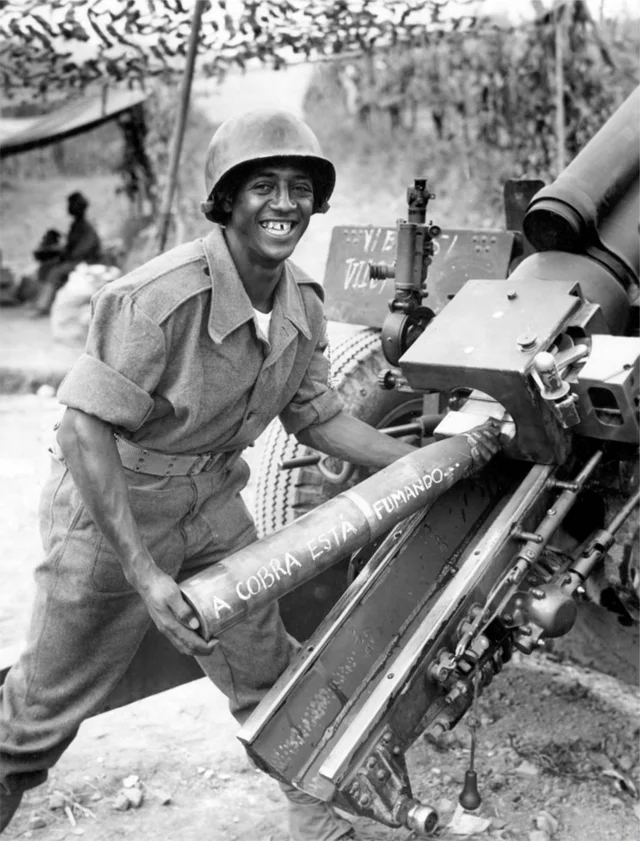
FEB soldier loads artillery with shell inscribed with A COBRA ESTÁ FUMANDO; THE SNAKE IS SMOKING (Getty Images)

The Second World War is a conflict well catalogued and studied by high school students, history buffs, filmmakers, writers, and scholars. But as significant and consequential the war was to every corner of the world, there would inevitably some stories that would be forgotten by its popular history. One such story, at least outside of South America, is that of the 25,000 man-strong Brazilian Expeditionary Force (Força Expedicionária Brasileira, or FEB).

Prior to their entry into the war, Brazil had been a valuable trading partner to the Allied powers, and even allowed the United States to construct air bases on its soil. Eventually anti-Axis sentiments began to mount as Brazilian merchant ships were sunk by German U-boats, and in August of 1942, Brazil declared war on the Axis powers. Initially, Brazilian support to the Allies was no different from that of other South American countries — providing much-needed war material by becoming a key link in the supply chain across the Atlantic and into Africa. However, Brazilian leaders soon realized that by sending an actual military force to the Allies’ aid, it would be a symbolic commitment to their cause, and improve their position at the negotiation table once the war came to an end.

In addition to its main infantry division, the FEB also included a fighter squadron, and was supported by the Brazilian Navy. In the summer of 1944, the first Brazilian troops arrived in Naples, merging itself into a larger American force that was already fighting a brutal campaign in Italy. Their nickname was the Cobras Fumantes (“Smoking Snakes”), after it became a running joke that it was more likely for a snake to smoke than it would be to see the FEB to see any actual combat.

From the memoirs of Mark Clark, commander of the U.S. Fifth Army:

The Performance of the Brazilians was, of course, important politically as well as militarily. Brazil was the only Latin American country to send an expeditionary force to take part in the European war, and, naturally, we were eager to give them a chance to make a good showing.

While the small force was not hugely impactful when considering the massive scale of military operations during WW2, they were nonetheless remembered in the hearts and minds of the Brazilian people. Perhaps the greatest of these victories was at the Battle of Collecchio, in which the FEB surrounded and captured two German infantry divisions on April 29, 1945, just days before the fall of Berlin, the collapse of Nazi Germany, and the end of the war in Europe.

The legacy of the FEB in Brazil can be considered somewhat complicated, especially considering the various roles FEB veterans played during the 1964 Brazilian coup d’état. However, it can generally be said that the Brazilian Expeditionary Force is an enduring symbol of national pride for Brazil, and serves as testament to the bravery and dedication of countless of individuals during WW2, particularly by countries who roles in the war are not as well known.