
Eugenics in America Part III: Native American Women

Cartoon from US Department of Health, Education, and Welfare (HEW), encouraging American Indians to have a sterilization procedure. Left depicts tired parents with many children and only one horse, right depicts happy, active parents with a single child but many horses. (Akwesasne Notes, via UC Berkley Law)

Since the arrival of the first European colonists, the indigenous population of the Americas, especially in the more sparsely populated tribes in modern-day Canada and the United States, has been in grave danger due to the multitude of threats posed by colonialism and its legacy. Among these threats, the most commonly known in popular history are likely the deadly smallpox epidemics or the forced relocation of tribes onto reservations, both of which happened largely until the late 19th century. But a far more recent concern about the civil rights and autonomy of American Indians was brought to light well within a human lifetime from the present day, when tens of thousands of Native American women were coerced into dangerous and effectively irreversible sterilization procedures. The number of women sterilized, though small in the context of the total US population, is massive when taken as a proportion of the Native American population; far higher in any other ethnicity in the United States.

In 1955, the Indian Health Service (IHS) was founded after the authority to oversee Indian health concerns was transferred from the Bureau of Indian Affairs (then known as the Office of Indian Affairs) to the Department of Health, Education, and Welfare. The IHS aimed to provide necessary care to the millions of Native Americans living on reservation across the country, and was, in fact, successful in ensuring that more people had their healthcare needs properly addressed. However, most the doctors of the IHS were not Indians themselves, and some thus held the same prejudice against Native Americans that many others did at the time. Many were under the belief that Indians were inherently intellectually and morally inferior, and that they could not be trusted to manage their own health. These assumptions, though problematic in and of themselves, became especially concerning just a decade after the founding of the IHS, when the Service began to provide family services to its patients.

The United States government had long been concerned about the extremely high birth rates in many Indian communities, with some tribes averaging up to 4 children for every adult mother in 1970, double that of the America’s white population. Many attributed the problems of poverty, drug abuse, and overall social decay to the rapidly rising Indian population. The family service program was meant to advise patients about different methods of birth control, but the prejudice against the Indians—taking the form of a flawed dynamic in which the doctors had a superior intellectual and authoritative position on their patients—became very apparent as many patients were coerced into receiving treatments they would have otherwise refused. The two most common procedures for women were tubal ligations (colloquially known as “getting one’s tubes tied), in which the Fallopian tubes are blocked, and the far more dangerous hysterectomy—the complete removal of the uterus. Both procedures were extremely difficult or impossible to reverse and are considered permanent forms of birth control.

Despite the extreme consequentiality of the procedures being done, patients often did not have an interpreter through which they could clearly communicate with their doctor, while the doctors themselves often omitted any mention of a procedure’s permanency or other long term effects. Several Indian women later interviewed also claimed that the IHS, as well as other welfare agencies, threatened to cut their benefits should they choose to have another child. Perhaps the most coercive technique, however, was the threat of losing one’s children to foster homes, adoption, or boarding schools—a fear deeply rooted into the culture of Canadian and American Indian tribes.

Jane Lawrence, from her essay, The Indian Health Service and the Sterilization of Native American Women, American Indian quarterly via University of Nebraska Press.

A young Indian woman entered Dr. Connie Pinkerton-Uri’s Los Angeles office on a November day in 1972. The twenty-six-year-old woman as Dr. Pinkerton-Uri for a “womb transplant” because she and her husband wished to start a family. An Indian Health Service (IHS) physician had given the woman a complete hysterectomy when she was having problems with alcoholism six years earlier. Dr. Pinkerton-Uri had to tell the young woman there was no such thing as a “womb transplant” despite the IHS physician having told her that the surgery was reversible. The woman left Dr. Pinkerton Uri’s office in tears.

Estimates for the number of American Indian women sterilized in the 1970s are almost dumbfounding, ranging from 25 to 50 percent of the total population. Dr. Constance Redbird Pinkerton Uri, a Choctaw/Cherokee physician of the IHS and advocate for Indian interests, stated that the mass sterilization was not motivated by a desire to reduce the native population, but by a flawed idea that the solution to poverty was to limit the number of children a family could have. Others, however, such as Northern Cheyenne tribal judge Marie Sanchez viewed as a modern form genocide; a continuation of the injustices perpetrated by the United States government against Native Americans. Whatever the motive was, it was clear that the sovereignty and welfare of America’s Indian Tribes were in grave danger, and justice began to be demanded as many Indians rallied under the larger Red Power movement, which advocated for greater Indian self-governance and reduced influence from the American federal government. The largest victory of the movement was in 1976 when the Indian Health Care Improvement Act was passed, transferring the power of managing the IHS to the tribes themselves, with many IHS facilities having since been taken over by regional tribe authorities.

Throughout the history of the United States, the balance between the power of the federal government and the interests of the country’s indigenous people has redefined, tested, and broken several times over. The question of what place, if any, that American Indians have in the vision of an equal, prosperous country continues to be asked today. The mass sterilization of Native American women in the 1970s is just one example of how easily power can be abused, and how easily that abuse can ignored or forgotten.
Eugenics in America Part II: African-Americans

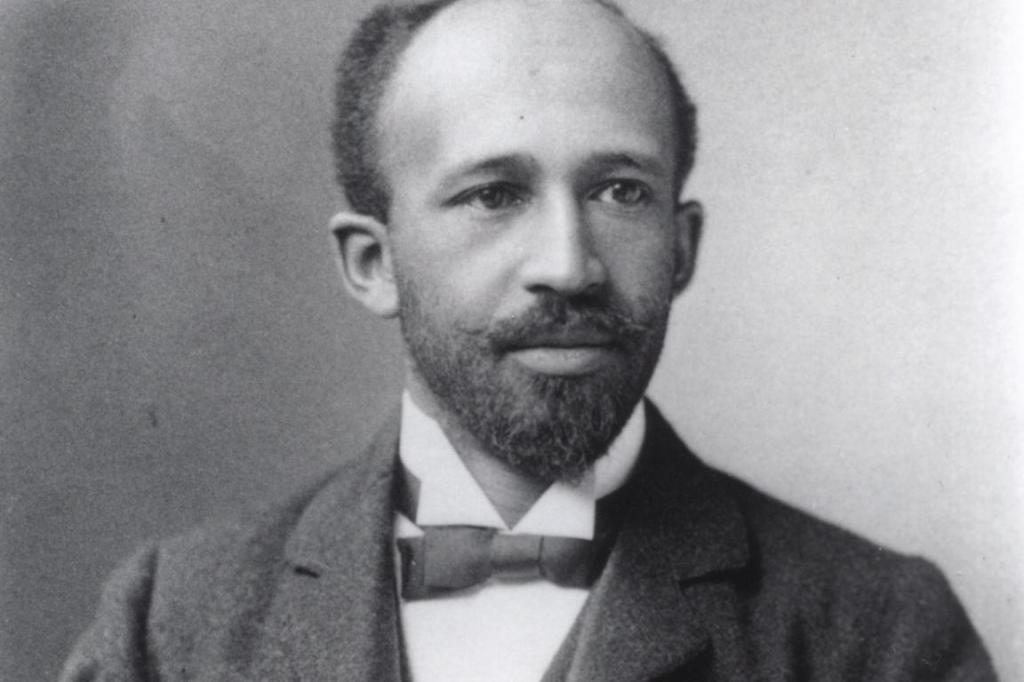
W.E.B. Du Bois, black activist and eugenics advocate (Smithsonian)

The story of eugenics in the United States and the concurrent social movements for the interests of African Americans are deeply intertwined. History has revealed that there were actually African American supporters on both sides of the eugenics argument, but usually for different reasons than their white counterparts. The relationship that black activists had with eugenics in a given time period can provide an insight into the changing goals and reasoning of the centuries-long struggle for racial justice.

As eugenics began to gain prominence in the late 19th century, some African Americans, despite the mainstream movement often labeling those of African descent as an “unfit” group, saw it as a possible way to improve their race. While some African Americans believed in protecting the racial purity of the black race (such as Marcus Garvey), or even that the black race itself was inferior (such as William Hannibal Thomas), the majority of eugenics proponents saw the ideas of “fit” and “unfit” groups as something no different from breeding cows or corn.

W.E.B. Du Bois was a leading intellectual within the black community, and strong advocate for “assimilationist eugenics”. He believed that it was the responsibility of the African American community to lift itself out of its current state, not just through social or environmental changes, but by selecting which of its members should procreate. Du Bois also claimed that the mixed-race children born to white slave owners (and the decedents of those children) were partially responsible for black moral decay by carrying the genes of perverted adulterers. He observed that similar to any other race, the black race contained individuals who possessed traits that were desirable or defective. One of Du Bois’ famous ideas was that of the “Talented Tenth” He believed that only the best of the race would be able to save the whole race. All the while, he insisted that the white and black races were equal, and that the differences alleged by contemporary white scientists were the result of class and environment rather than genetics.

Another prominent African American proponent of eugenics was Dr. Thomas Wyatt Turner. In contrast to Du Bois’ balanced emphasis on both nature and nurture, Turner doubled down on the ideas of biological determinism and the importance of one’s genetic background. He helped reshape the mainstream ideas of eugenics into one that better fit the notion of racial equality. Turner’s ideas were taught to thousands of black students at Howard, Tuskegee, and Hampton. In fact, a 1915 exam from Turner’s class at Howard University read, “Define Eugenics. Explain how society may be helped by applying eugenic laws“. In the end, Turner was hugely responsible for popularizing the eugenics both among the black elite, and the general African American population through his volunteer lectures. Years later, the NAACP, which Turner would help found, would hold baby contests (yes, baby contests) that were no doubt tied to the ideas that Turner helped spread.

While eugenics was viewed favorably by African Americans for decades, the emerging civil rights movement of the mid 20th century began to see the idea rapidly fall out of favor. Eugenics policies, such as the North Carolina Eugenics Board, which disproportionally affected African Americans were common in the United States, especially in the South. One policy of the generally progressive President Lyndon B. Johnson was the allocation of federal funding towards birth control in low income communities. Although the more radical, black nationalist faction of the civil rights movement already opposed the moderate reforms of the Johnson administration, this particular action sparked widespread outrage, since many saw it as limiting the black population as a way to suppress its influence in the United States.

The popularity of eugenics plummeted across racial communities by the 1950s and 60s, especially in response to atrocities of the Nazi regime, who adopted eugenics and Aryan superiority as a basis for its ideology. The fall of eugenics was particularly strong in the African American community, who sometimes highlighted the hypocrisy of fighting against injustice abroad when it was still being fought for at home. It was not long before eugenics was seen to be as conducive to black empowerment as lynchings or poll taxes were.

Eugenics in America Part I: Buck v. Bell

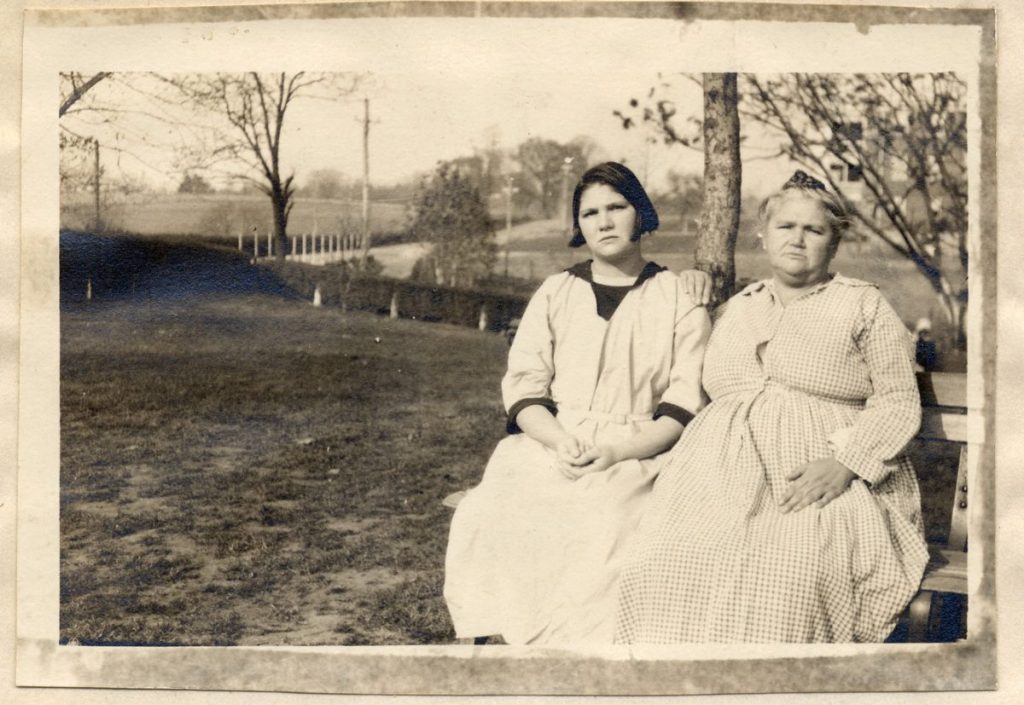
Carrie and Emma Buck (Encyclopedia Virginia)

Eugenics, though a concept present to some degree for a large part of human history, began to gain significant traction among some Western intellectual and political circles in the 19th century. Advocates for eugenics argue that certain genetic traits in humans are more desirable than others, and that those who possess undesirable traits should be sterilized or otherwise removed from the genetic pool. Some eugenicists support the ideology on the basis that certain racial or ethnic groups are superior to others, while others seek to eliminate certain physical or mental disabilities from the population. While Nazi Germany and the Greek city-state of Sparta are probably history’s most famous proponents of eugenics, the practice also has an unfortunate history in the United States. This three-part article series will attempt to briefly overview three different historical outlooks of eugenics in America.

Carrie Buck was on July 3, 1906, in Charlottesville, Virginia to Emma and Frederick Buck. While Frederick had abandoned the family shortly after Carrie’s birth, Emma was admitted to the Virginia State Colony for Epileptics and Feebleminded, an institution that housed Virginians deemed mentally unfit to be a part of society. Carrie Buck initially had a normal childhood under her new foster parents, earning average grades in school, and later, as was relatively common for young girls at the time, removed from school to help with domestic work. However, her life was forever changed at age 17 when she was raped and impregnated by her foster mother’s nephew. To cover up the family’s embarrassment from the incident, her foster parents committed Buck to the same institution that her mother was in, accusing her of feeble-mindedness and promiscuity. Carrie Buck’s newly born daughter, Vivian, was deemed to be similarly mentally feeble, although later in life she actually excelled in school. Shortly after Carrie’s admittance, the Colony’s Board of Directors authorized her sterilization via salpingectomy, an irreversible procedure that removes the patient’s Fallopian tubes.

Seeking to test the legal legitimacy of the practice of forced sterilization through the Virginia Sterilization Act of 1924, the Colony’s superintendent, Albert Sidney Priddy (though later succeeded by John Hendren Bell), asked Buck’s state-appointed guardian, Robert G. Shelton, to challenge the order for her sterilization. Shelton appealed the order both to the Amherst County Circuit Court, and the Supreme Court of Virginia. After the order for Carrie’s sterilization was affirmed in each of those lower courts, he appealed one final time to the highest court in the country, the United States Supreme Court, in BUCK v. BELL, Superintendent of State Colony Epileptics and Feeble Minded.

Buck’s attorney, Irving P. Whitehead, argued that the Due Process Clause of the Fourteenth Amendment prohibited the Commonwealth of Virginia from performing involuntary sterilization, because a citizen was being deprived of her rights without due process of law. Meanwhile, the Colony’s attorney, A. E. Strode, cited the apparent (though not actual) genetic defects in the Bucks’ bloodline, instead arguing that the sterilization was justified under the premise that removing those defects from the Commonwealth’s collective gene pool was in the best interests of the state. On May 2, 1927, the Court delivered its verdict: ruling 8-1 in favor of Bell. The lone dissenter in the case was Justice Pierce Butler, whose Catholic faith likely influenced his decision. He did not write a dissenting opinion.

From the majority opinion of Buck v. Bell (1927):

It is better for all the world if, instead of waiting to execute degenerate offspring for crime or to let them starve for their imbecility, society can prevent those who are manifestly unfit from continuing their kind.

Three generations of imbeciles are enough.

The significance of Buck reaches far beyond the case of Carrie Buck herself. It essentially legitimized all similar eugenic practices in the United States, and is no doubt one of the largest stains on the country’s legacy when it comes to eugenics. In fact, defense teams for Nazi officials during the Nuremburg trials used Buck in their arguments, using the decision to expose a terrible hypocrisy in American criticism of Nazi ideologies during WW2.

While Skinner v. Oklahoma ruled 1942 that criminals could not sterilized as punishment for their crimes, it did not ban the type of state-mandated sterilization that was affirmed by Buck. Forced sterilization of ordinary citizens deemed mentally unfit was still legal in Virginia until 1974, with the last such operation in the country being performed in Oregon in 1981. Today, Buck v. Bell is used as a symbol of the struggle for disability rights in the United States, and demonstrates how disabled Americans were one of the many groups in the country who faced outright discrimination and oppression during this time period.