Charles Hamilton Houston: “The Man who Killed Jim Crow”

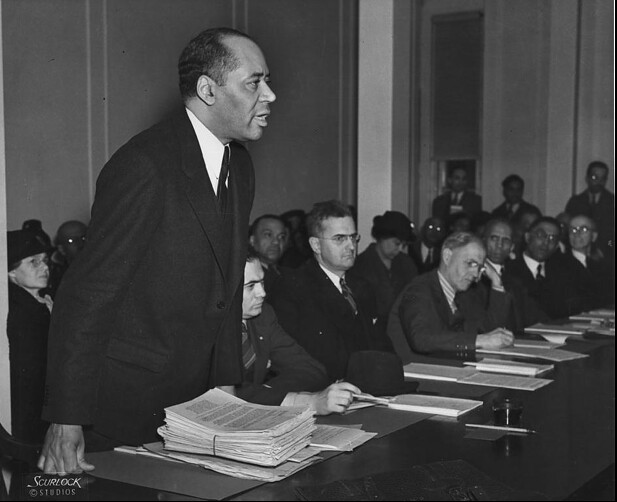
Houston delivers his argument. (Charles Hamilton Houston Institute)

The era of “Jim Crow”, a period of American history with widespread societal and legal discrimination against African-Americans (especially in the South), is generally considered to have ended with the Civil Rights Movement in the 1960s. Famous leaders from this period, such as Dr. Martin Luther King Jr., Malcolm X, and others are widely celebrated, since their actions took place at the climax of the movement. Less appreciated, however, are the many leaders who paved the way for this celebrated generation of activists, many of whom, including the subject of today’s article, never lived to see the fruits of their labor.

Charles Hamilton Houston was born in 1895 to middle-class African-American family in Washington D.C. Houston’s father, William, was an attorney. Houston was described as a brilliant child, graduating from Dunbar High School at the age of 15. He then went on to Amherst College in Massachusetts, where he left as one of six valedictorians in his class. Following a brief stint teaching English at Howard University, Houston applied as an officer to the United States Army upon the country’s entry into World War I. This was a formative experience for the young Houston, who witnessed the constant bigotry and racism that was present in a still segregated army. Using the law, he was determined to right the wrongs he saw everywhere. Houston returned to the United States in 1919, shortly after the war’s end. He enrolled in Harvard Law School, becoming the first African-American to serve as an editor of the Harvard Law Review, and graduated with honors in 1923. Houston was soon admitted law to District of Columbia Bar, where he would begin to practice law alongside his father. He also aided in the creation of the National Bar Association, which unlike the dominant American Bar Association, recognized and accredited African-American attorneys.

Beginning in 1924, Houston returned to Howard University, only this time teaching law instead of English. Mordecai Johnson, the university’s president, saw potential and Houston, and allowed him a significant role in reforming Howard Law School. Although it was responsible for training three fourths of the country’s Black lawyers, Howard Law School still only held part-time night classes. After Houston was appointed vice-dean (effectively with the powers of a dean) of the law school in 1929, he helped bring about its transition into a full-time law school. With his new role as the head of the African-American law’s central institution, Houston envisioned a new generation of Black lawyers who could use their skills for the advancement of their people. Among his students were James Nabrit, Oliver Hill, Spottswood Robinson, and Thurgood Marshall. Houston’s role in fighting Jim Crow, however, was not limited to the classrooms of Howard University. Rather, by working with the attorneys he trained himself at Howard, Houston was able to make considerable strides towards racial equality under the law.

Resigning from his post at Howard in 1935, Houston would spend the remainder of his life working on civil rights law. He assumed the position as the first special council to the National Association for the Advancement of Colored People (NAACP). One of his first cases following his departure from Howard was in Hollins v. State of Oklahoma, which concerned a Black man sentenced to death by an all white jury. Houston and his all-black defense team were able to prevent the man from being executed. Though it was a goal of Houston to rid American juries, it would be decades before that become a reality. Another of Houston’s primary concerns was the segregation of public schools, which was deemed constitutional by the 1897 Supreme Court case Plessy v. Ferguson, under the doctrine of “separate but equal”. He would dedicate much of his work towards attacking this doctrine, which he believed was the keystone for much of Jim Crow’s stranglehold on the South. Alongside Thurgood Marshall and the Baltimore branch of the NAACP, Houston argued in Murray v. Pearson before the Maryland Court of Appeals. The case concerned Donald Gaines Murray, an applicant to the University of Maryland School of Law who was rejected due to his race. The court ruled in Murray’s favor, and ordered the school to admit Murray. This ruling, however, did not mean the end of segregation in America’s, or even in Maryland’s schools. The court noted that only because the University of Maryland School of Law was the only law school in the state, did the Equal Protection Clause of the Fourteenth Amendment apply. In theory, a separate Black-only law school could legally exist in Maryland. Nonetheless, this was heralded as a victory for Houston and his devoted followers.

The precedent of outlawing segregation in institutions which were the only of its kind within its state was carried on to the federal level, thanks to Houston’s work in Missouri ex rel. Gaines v. Canada. This case was very similar in background to Murray, with the added impact that it started to raise doubt within the Supreme Court of the United States about the legitimacy of “separate but equal”. Still, however, the doctrine remained as the official legal precedent in American law. Concurrent with his struggle towards desegregating American schools was Houston’s battle towards racist housing covenants. These were legally binding contracts attached to properties that restricted who could purchase it, which often meant discrimination against prospective Black homeowners. Using these covenants, real estate developers could directly control the demographics of the neighborhoods they built. In 1948 the Supreme Court ruled in Shelley v. Kramer that the enforcement of these covenants by state or local authorities was unconstitutional, thus ending a decades-long battle by Houston and the NAACP. Though Houston himself did not argue before the court, his advice and connections to the Howard Law School alumni who did, are another example of Houston’s vital role in dismantling Jim Crow on multiple fronts.

Charles Hamilton Houston died of a heart attack on April 22, 1950, at the age of 54. Just four years after his death came the landmark decision Brown v. Board of Education, which successfully overruled the doctrine of “separate but equal”. The case was headed by the director-counsel of the newly established NAACP Legal Defense Fund, and one of Houston’s most loyal disciples, Thurgood Marshall. In 1967, Marshall would be appointed by Lyndon B. Johnson as the first African-American justice to serve on the Supreme Court of the United States.

We owe it all to Charlie.

– Thurgood Marshall

The Lavender Scare

Frank Kameny (second picketer in line) and other activists protest outside the White House (Washington Post)

Happy Pride Month from HFE! 🏳️‍🌈

Many Americans who learned about the state of the United States government during the 1950s will be familiar with the practices and consequences of McCarthyism. Named after Senator Joseph McCarthy, McCarthyism is an era in American politics in which many government officials were accused of having communist sympathies, and therefore were disloyal to the United States. It is considered to be one of the primary effects of the Second Red Scare, a wave of fears and resentments towards communist and socialist ideologies that swept the country during the 1950s. As harmful as this political witch hunt was to many individuals, it often takes the spotlight from a concurrent practice that was equally damaging to the careers and reputations of thousands of American civil servants: the Lavender Scare. The term Lavender Scare, first coined by LGBTQ historian David K. Johnson, is used to describe a direct, pervasive discrimination against suspected homosexuals, bisexuals, or other members of the LGBTQ community within the United States federal government. The Scare resulted not only in the expulsion of thousands of competent, loyal federal workers, but the smearing of their reputations, and the public exposure of their sexual identities to a hostile public.

In 1952, homosexuality was deemed a mental illness by the American Psychological Association. Most aspects of the government, academia, and society as a whole saw homosexuality as sexual perversion, no different from pedophilia or bestiality. But while LGBTQ Americans always faced intolerance wherever they went for much of history, it was not until the 1950s did they become associated with treachery, espionage, and ties to communism which together constituted the primary concerns of McCarthyism. Many argued that because the majority of homosexuals were closeted, they could invariably be controlled by blackmail from foreign agents, and therefore could not be trusted in the federal government. While the claim itself is unfounded at best, and bigoted at worst, the existing hostile sentiment towards LGBTQ persons allowed a systemic discrimination against the group with virtually no resistance from those in power.

While subtle means of rooting out suspected homosexuals in certain government institutions such as the State Department or the Armed Forces had existed long before McCarthyism, 1950 became a key year in the Lavender Scare. In June of that year, investigations began to be conducted by the US Senate investigating the “threat” that homosexuals in government posed to the United States. The Subcommittee on Investigations released their findings in December, declaring that homosexuals were a real and present threat, and that it was necessary to remove them from their positions, because they were predisposed to commit acts that were morally wrong, illegal, or even treacherous.

From the original Senate report, “Employment of Homosexuals and Other Sex Perverts in Government”:

It is the opinion of this subcommittee that those who engage in acts of homosexuality and other perverted-sex activities are unsuitable for employment in the Federal Government. This conclusion is based upon the fact that persons who indulge in such degraded activity are committing not only illegal and immoral acts, but they also constitute security risks in positions of public trust.

Just three years following the Senate report, Executive Order 10450 was signed by President Dwight D. Eisenhower, allowing the FBI, the Civil Service Commission, and the federal agencies themselves to investigate federal workers whom they suspected were partaking in “criminal, infamous, dishonest, immoral, or notoriously disgraceful conduct, habitual use of intoxicants to excess, drug addiction, or sexual perversion”. Under this order, federal workers became subject to security investigations that examined deep into one’s professional and personal lives. Workers could be investigated, interrogated, and eventually fired on suspicions as arbitrary as receiving numerous calls from a member of the same sex, or wearing clothes deemed unfit for their apparent gender. An estimated 5,000 federal workers were fired as a direct result of Executive Order 10450, while thousands more hoping to work for the federal government were barred from employment. One particularly disturbing case can be seen in Andrew Ference, a young research assistant who worked at the American embassy in Paris. After he was discovered to have been living with a male partner, he was subjected to harsh investigations and interrogations. Ference, fearing that he would lose his dream job, was under intense mental stress. On September 7, 1954, while his investigation was still ongoing, he committed suicide in his Paris apartment.

In 1957, Frank Kameny, a Harvard-educated astronomer in the US Army Map Service, was fired from his position due to him refusing to disclose information about his sexuality, and was later permanently barred from any future federal employment. Furious by the injustice he was subjected to, Kameny went on the co-found the Mattachine Society, one of America’s first national gay rights activism groups. The Society, though later splitting into regional organizations, conducted some of the first gay rights protests by openly LGBTQ persons, many of which were former federal employees who were fired due to their sexual or gender identity. Activists such as Kameny continued to fight all the way until the 1990s, when President Bill Clinton finally banned all sexual-orientation-based discrimination in federal employment or the granting of federal security clearances.

While the Lavender Scare no doubt left a legacy of homophobia in the American federal government and bureaucracy, it also left an important legacy of LGBTQ activism. The actions of bold leaders like Frank Kameny were the first steps in a continuing fight towards true equality for all LGBTQ Americans.

The (real) Kansas Jayhawks

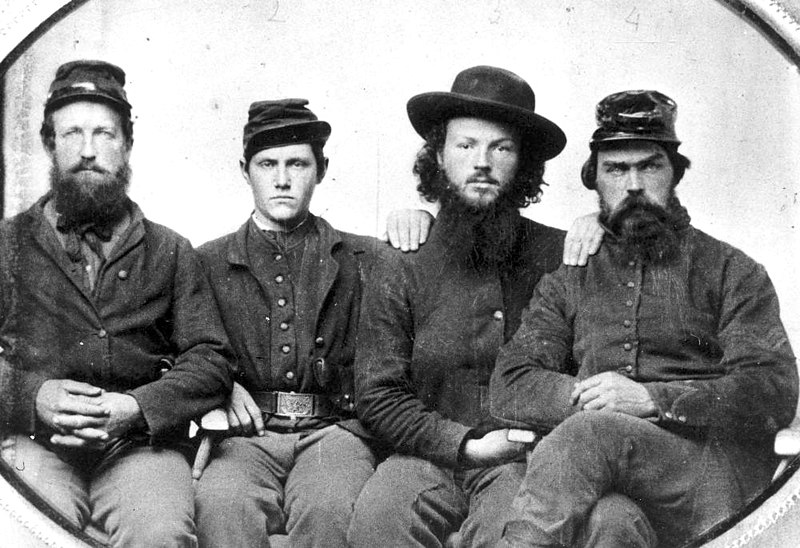
Soldiers from the 7th Kansas Volunteer Cavalry (Kansas Historical Society)

What do decorated college and professional basketball player Wilt Chamberlain and a storied group of anti-slavery militias have in common? Both of their titles: “Jayhawk(er)”, are deeply connected to the history of Kansas. The term has been used to represent the University of Kansas and its athletics teams, but also for Kansans as a whole, and has become a symbol of pride for the entire state. Contrary to its name and cartoon image, the Jayhawk is not actually a real bird, and while the name is one recognized across the United States, few outside of the state of Kansas may know the term’s true, and rich history.

The term “jayhawker” is most likely a compound word between the blue jay and sparrow hawk. It was first coined by the original Kansas settlers who admired both the blue jay’s turbulent personality and the sparrow hawk’s predatory nature, and the term became applicable to anyone from the region. It was not long, however, that the story of Kansas took an sharp turn, as the Kansas-Nebraska Act of 1954 was signed into law. The bill, passed during a time of divisiveness over the issue of slavery, granted the newly formed territories of Kansas and Nebraska to right to decide by referendum whether they would be open or closed to slavery. While intended as a lasting compromise between pro and anti-slavery factions in the US, it only heightened tensions over the issue, which would lead to—preluding, of course, the American Civil War—a period known as Bleeding Kansas.

As word spread about the policy through which Kansas and Nebraska would decide their stance on slavery, thousands of armed supporters on both sides flooded west hoping to skew the favor in one direction or another. The southerners, hailing mostly from neighboring Missouri, were motivated by a staunch opposition to that they viewed as tyrannical abolitionism. The majority of northerners, on the other hand, were only somewhat abolitionist, most feeling little sympathy for enslaved Africans. These settlers were mostly part of the Free Soil movement, primarily concerned with protecting the White American family farm, which would no doubt be endangered by the expansion of southern-style plantations. In fact, the majority of supporters from this movement supported outlawing Blacks, free or enslaved, from entering the Kansas territory at all. Only a small portion of northern settlers, such as the legendary John Brown, were opposed to slavery on mainly on moral grounds. As the two (or perhaps three) sides, both armed and ready to fight, began to enter their area, an interesting assortment of nicknames began to sprout for different groups during the late 1850s. The pro-slavery bands during Bleeding Kansas were generally called “bushwhackers” due to their ambush tactics and criminal reputations, while similarly aligned groups that specifically came from Missouri were called “border ruffians”. Finally, their abolitionist counterparts, seeing themselves as rightful defenders of Kansas from pro-slavery aggression, adopted the name affiliated with the region itself: “jayhawker”.

Charles Rainsford Dennison, famed jayhawker and perhaps the most fashionable officer of the American Civil War (Dickinson College)

While the dubious motives of the anti-slavery faction may very well on its own do enough to disprove the notion of Bleeding Kansas as a noble struggle between good and evil, it is the means through which both sides carried out their beliefs that is perhaps what made the conflict so ugly. Jayhawkers were known to use any means necessary to combat their enemies, not hesitating to murder or pillage to further their cause, but also to earn personal land and monetary gains from those they murdered or pillaged. As the intra-Kansas conflict continued into the much larger Civil War in 1861, so too did many of the jayhawkers’ and bushwhackers’ tactics. Union and Confederate leadership alike detested the work of those such Charles Dennison, a notable jayhawker who led a Union militia cavalry unit notorious for its brutality and willingness to use extrajudicial killings. A more respected, although equally uncompromising fighting force that adopted the jayhawker moniker was Lane’s Brigade, under Senator and Brigadier General Thomas H. Lane, which earned many victories along the Missouri border. Throughout the war much of the Western frontier conflict was defined by unhinged guerilla warfare, as thousands of civilians were robbed, displaced, or summarily executed by militants on either side of the conflict, as seen in the Lawrence and Osceola raids.

As the guerilla conflict cooled off and the Civil War came to a close, the name “jayhawker” remained in the hearts of Kansans, who did not see the term in the same negative light which their former enemies had, but instead embraced it as an homage to Kansan statehood and its contributions to the Union cause. In 1890, just 25 years after the end of the war, the University of Kansas football team took the field for the first time, proudly calling themselves the Kansas Jayhawkers. Today, the KU athletics teams instead use the truncated name “Jayhawk”, which despite its far-from-perfect origin, continues to be the symbol of Kansan pride it was 150 years ago.

Eugenics in America Part III: Native American Women

Cartoon from US Department of Health, Education, and Welfare (HEW), encouraging American Indians to have a sterilization procedure. Left depicts tired parents with many children and only one horse, right depicts happy, active parents with a single child but many horses. (Akwesasne Notes, via UC Berkley Law)

Since the arrival of the first European colonists, the indigenous population of the Americas, especially in the more sparsely populated tribes in modern-day Canada and the United States, has been in grave danger due to the multitude of threats posed by colonialism and its legacy. Among these threats, the most commonly known in popular history are likely the deadly smallpox epidemics or the forced relocation of tribes onto reservations, both of which happened largely until the late 19th century. But a far more recent concern about the civil rights and autonomy of American Indians was brought to light well within a human lifetime from the present day, when tens of thousands of Native American women were coerced into dangerous and effectively irreversible sterilization procedures. The number of women sterilized, though small in the context of the total US population, is massive when taken as a proportion of the Native American population; far higher in any other ethnicity in the United States.

In 1955, the Indian Health Service (IHS) was founded after the authority to oversee Indian health concerns was transferred from the Bureau of Indian Affairs (then known as the Office of Indian Affairs) to the Department of Health, Education, and Welfare. The IHS aimed to provide necessary care to the millions of Native Americans living on reservation across the country, and was, in fact, successful in ensuring that more people had their healthcare needs properly addressed. However, most the doctors of the IHS were not Indians themselves, and some thus held the same prejudice against Native Americans that many others did at the time. Many were under the belief that Indians were inherently intellectually and morally inferior, and that they could not be trusted to manage their own health. These assumptions, though problematic in and of themselves, became especially concerning just a decade after the founding of the IHS, when the Service began to provide family services to its patients.

The United States government had long been concerned about the extremely high birth rates in many Indian communities, with some tribes averaging up to 4 children for every adult mother in 1970, double that of the America’s white population. Many attributed the problems of poverty, drug abuse, and overall social decay to the rapidly rising Indian population. The family service program was meant to advise patients about different methods of birth control, but the prejudice against the Indians—taking the form of a flawed dynamic in which the doctors had a superior intellectual and authoritative position on their patients—became very apparent as many patients were coerced into receiving treatments they would have otherwise refused. The two most common procedures for women were tubal ligations (colloquially known as “getting one’s tubes tied), in which the Fallopian tubes are blocked, and the far more dangerous hysterectomy—the complete removal of the uterus. Both procedures were extremely difficult or impossible to reverse and are considered permanent forms of birth control.

Despite the extreme consequentiality of the procedures being done, patients often did not have an interpreter through which they could clearly communicate with their doctor, while the doctors themselves often omitted any mention of a procedure’s permanency or other long term effects. Several Indian women later interviewed also claimed that the IHS, as well as other welfare agencies, threatened to cut their benefits should they choose to have another child. Perhaps the most coercive technique, however, was the threat of losing one’s children to foster homes, adoption, or boarding schools—a fear deeply rooted into the culture of Canadian and American Indian tribes.

Jane Lawrence, from her essay, The Indian Health Service and the Sterilization of Native American Women, American Indian quarterly via University of Nebraska Press.

A young Indian woman entered Dr. Connie Pinkerton-Uri’s Los Angeles office on a November day in 1972. The twenty-six-year-old woman as Dr. Pinkerton-Uri for a “womb transplant” because she and her husband wished to start a family. An Indian Health Service (IHS) physician had given the woman a complete hysterectomy when she was having problems with alcoholism six years earlier. Dr. Pinkerton-Uri had to tell the young woman there was no such thing as a “womb transplant” despite the IHS physician having told her that the surgery was reversible. The woman left Dr. Pinkerton Uri’s office in tears.

Estimates for the number of American Indian women sterilized in the 1970s are almost dumbfounding, ranging from 25 to 50 percent of the total population. Dr. Constance Redbird Pinkerton Uri, a Choctaw/Cherokee physician of the IHS and advocate for Indian interests, stated that the mass sterilization was not motivated by a desire to reduce the native population, but by a flawed idea that the solution to poverty was to limit the number of children a family could have. Others, however, such as Northern Cheyenne tribal judge Marie Sanchez viewed as a modern form genocide; a continuation of the injustices perpetrated by the United States government against Native Americans. Whatever the motive was, it was clear that the sovereignty and welfare of America’s Indian Tribes were in grave danger, and justice began to be demanded as many Indians rallied under the larger Red Power movement, which advocated for greater Indian self-governance and reduced influence from the American federal government. The largest victory of the movement was in 1976 when the Indian Health Care Improvement Act was passed, transferring the power of managing the IHS to the tribes themselves, with many IHS facilities having since been taken over by regional tribe authorities.

Throughout the history of the United States, the balance between the power of the federal government and the interests of the country’s indigenous people has redefined, tested, and broken several times over. The question of what place, if any, that American Indians have in the vision of an equal, prosperous country continues to be asked today. The mass sterilization of Native American women in the 1970s is just one example of how easily power can be abused, and how easily that abuse can ignored or forgotten.

Eugenics in America Part II: African-Americans

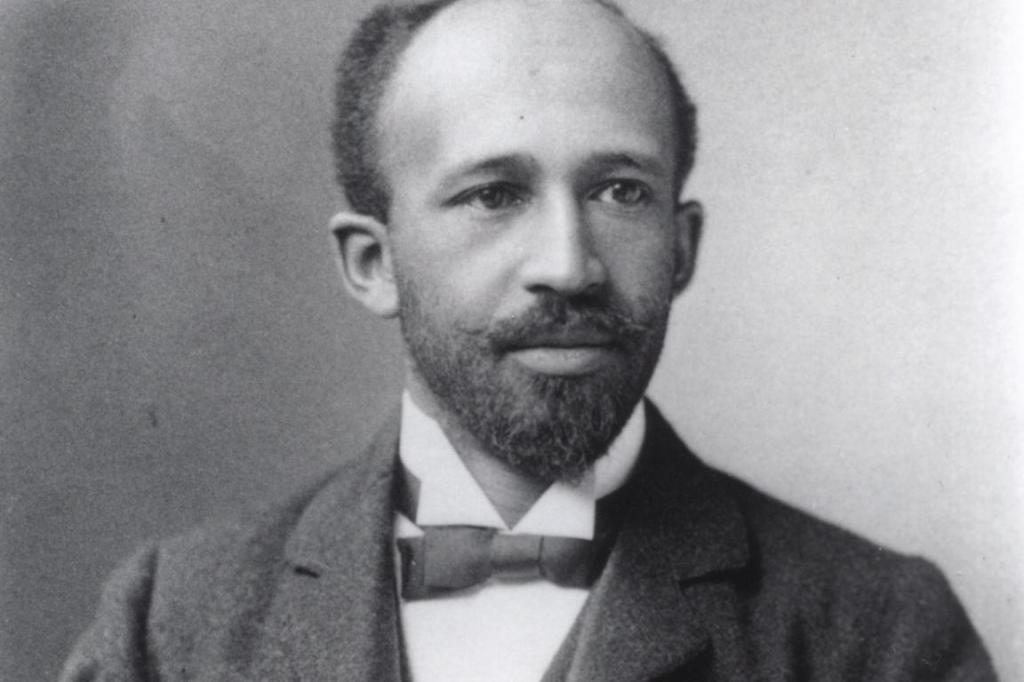
W.E.B. Du Bois, black activist and eugenics advocate (Smithsonian)

The story of eugenics in the United States and the concurrent social movements for the interests of African Americans are deeply intertwined. History has revealed that there were actually African American supporters on both sides of the eugenics argument, but usually for different reasons than their white counterparts. The relationship that black activists had with eugenics in a given time period can provide an insight into the changing goals and reasoning of the centuries-long struggle for racial justice.

As eugenics began to gain prominence in the late 19th century, some African Americans, despite the mainstream movement often labeling those of African descent as an “unfit” group, saw it as a possible way to improve their race. While some African Americans believed in protecting the racial purity of the black race (such as Marcus Garvey), or even that the black race itself was inferior (such as William Hannibal Thomas), the majority of eugenics proponents saw the ideas of “fit” and “unfit” groups as something no different from breeding cows or corn.

W.E.B. Du Bois was a leading intellectual within the black community, and strong advocate for “assimilationist eugenics”. He believed that it was the responsibility of the African American community to lift itself out of its current state, not just through social or environmental changes, but by selecting which of its members should procreate. Du Bois also claimed that the mixed-race children born to white slave owners (and the decedents of those children) were partially responsible for black moral decay by carrying the genes of perverted adulterers. He observed that similar to any other race, the black race contained individuals who possessed traits that were desirable or defective. One of Du Bois’ famous ideas was that of the “Talented Tenth” He believed that only the best of the race would be able to save the whole race. All the while, he insisted that the white and black races were equal, and that the differences alleged by contemporary white scientists were the result of class and environment rather than genetics.

Another prominent African American proponent of eugenics was Dr. Thomas Wyatt Turner. In contrast to Du Bois’ balanced emphasis on both nature and nurture, Turner doubled down on the ideas of biological determinism and the importance of one’s genetic background. He helped reshape the mainstream ideas of eugenics into one that better fit the notion of racial equality. Turner’s ideas were taught to thousands of black students at Howard, Tuskegee, and Hampton. In fact, a 1915 exam from Turner’s class at Howard University read, “Define Eugenics. Explain how society may be helped by applying eugenic laws“. In the end, Turner was hugely responsible for popularizing the eugenics both among the black elite, and the general African American population through his volunteer lectures. Years later, the NAACP, which Turner would help found, would hold baby contests (yes, baby contests) that were no doubt tied to the ideas that Turner helped spread.

While eugenics was viewed favorably by African Americans for decades, the emerging civil rights movement of the mid 20th century began to see the idea rapidly fall out of favor. Eugenics policies, such as the North Carolina Eugenics Board, which disproportionally affected African Americans were common in the United States, especially in the South. One policy of the generally progressive President Lyndon B. Johnson was the allocation of federal funding towards birth control in low income communities. Although the more radical, black nationalist faction of the civil rights movement already opposed the moderate reforms of the Johnson administration, this particular action sparked widespread outrage, since many saw it as limiting the black population as a way to suppress its influence in the United States.

The popularity of eugenics plummeted across racial communities by the 1950s and 60s, especially in response to atrocities of the Nazi regime, who adopted eugenics and Aryan superiority as a basis for its ideology. The fall of eugenics was particularly strong in the African American community, who sometimes highlighted the hypocrisy of fighting against injustice abroad when it was still being fought for at home. It was not long before eugenics was seen to be as conducive to black empowerment as lynchings or poll taxes were.

Eugenics in America Part I: Buck v. Bell

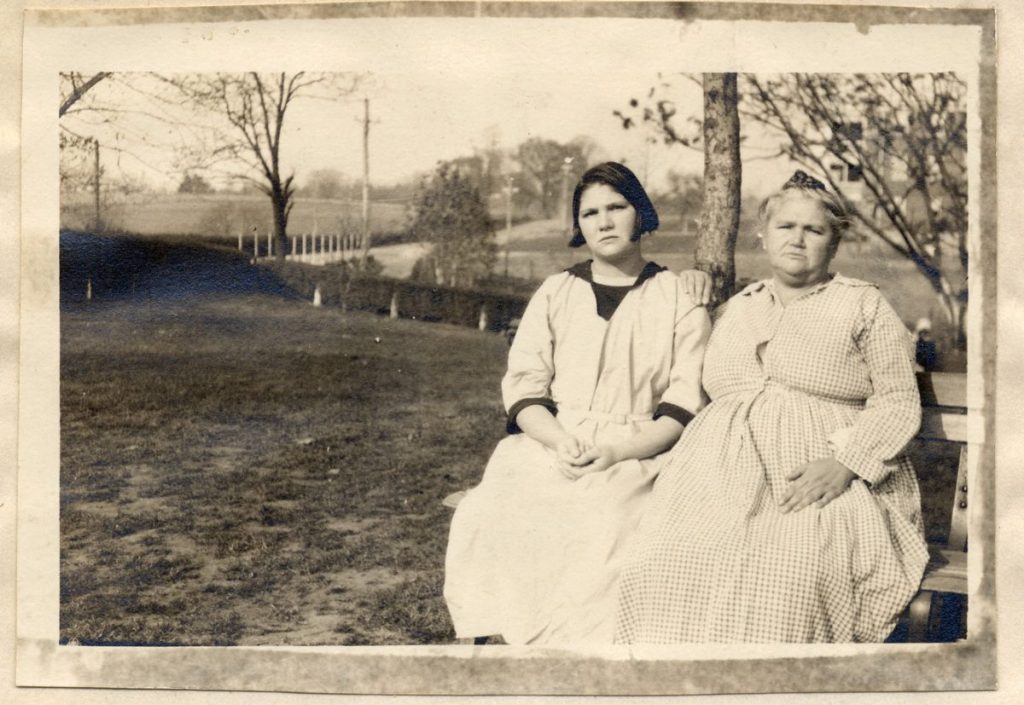
Carrie and Emma Buck (Encyclopedia Virginia)

Eugenics, though a concept present to some degree for a large part of human history, began to gain significant traction among some Western intellectual and political circles in the 19th century. Advocates for eugenics argue that certain genetic traits in humans are more desirable than others, and that those who possess undesirable traits should be sterilized or otherwise removed from the genetic pool. Some eugenicists support the ideology on the basis that certain racial or ethnic groups are superior to others, while others seek to eliminate certain physical or mental disabilities from the population. While Nazi Germany and the Greek city-state of Sparta are probably history’s most famous proponents of eugenics, the practice also has an unfortunate history in the United States. This three-part article series will attempt to briefly overview three different historical outlooks of eugenics in America.

Carrie Buck was on July 3, 1906, in Charlottesville, Virginia to Emma and Frederick Buck. While Frederick had abandoned the family shortly after Carrie’s birth, Emma was admitted to the Virginia State Colony for Epileptics and Feebleminded, an institution that housed Virginians deemed mentally unfit to be a part of society. Carrie Buck initially had a normal childhood under her new foster parents, earning average grades in school, and later, as was relatively common for young girls at the time, removed from school to help with domestic work. However, her life was forever changed at age 17 when she was raped and impregnated by her foster mother’s nephew. To cover up the family’s embarrassment from the incident, her foster parents committed Buck to the same institution that her mother was in, accusing her of feeble-mindedness and promiscuity. Carrie Buck’s newly born daughter, Vivian, was deemed to be similarly mentally feeble, although later in life she actually excelled in school. Shortly after Carrie’s admittance, the Colony’s Board of Directors authorized her sterilization via salpingectomy, an irreversible procedure that removes the patient’s Fallopian tubes.

Seeking to test the legal legitimacy of the practice of forced sterilization through the Virginia Sterilization Act of 1924, the Colony’s superintendent, Albert Sidney Priddy (though later succeeded by John Hendren Bell), asked Buck’s state-appointed guardian, Robert G. Shelton, to challenge the order for her sterilization. Shelton appealed the order both to the Amherst County Circuit Court, and the Supreme Court of Virginia. After the order for Carrie’s sterilization was affirmed in each of those lower courts, he appealed one final time to the highest court in the country, the United States Supreme Court, in BUCK v. BELL, Superintendent of State Colony Epileptics and Feeble Minded.

Buck’s attorney, Irving P. Whitehead, argued that the Due Process Clause of the Fourteenth Amendment prohibited the Commonwealth of Virginia from performing involuntary sterilization, because a citizen was being deprived of her rights without due process of law. Meanwhile, the Colony’s attorney, A. E. Strode, cited the apparent (though not actual) genetic defects in the Bucks’ bloodline, instead arguing that the sterilization was justified under the premise that removing those defects from the Commonwealth’s collective gene pool was in the best interests of the state. On May 2, 1927, the Court delivered its verdict: ruling 8-1 in favor of Bell. The lone dissenter in the case was Justice Pierce Butler, whose Catholic faith likely influenced his decision. He did not write a dissenting opinion.

From the majority opinion of Buck v. Bell (1927):

It is better for all the world if, instead of waiting to execute degenerate offspring for crime or to let them starve for their imbecility, society can prevent those who are manifestly unfit from continuing their kind.

Three generations of imbeciles are enough.

The significance of Buck reaches far beyond the case of Carrie Buck herself. It essentially legitimized all similar eugenic practices in the United States, and is no doubt one of the largest stains on the country’s legacy when it comes to eugenics. In fact, defense teams for Nazi officials during the Nuremburg trials used Buck in their arguments, using the decision to expose a terrible hypocrisy in American criticism of Nazi ideologies during WW2.

While Skinner v. Oklahoma ruled 1942 that criminals could not sterilized as punishment for their crimes, it did not ban the type of state-mandated sterilization that was affirmed by Buck. Forced sterilization of ordinary citizens deemed mentally unfit was still legal in Virginia until 1974, with the last such operation in the country being performed in Oregon in 1981. Today, Buck v. Bell is used as a symbol of the struggle for disability rights in the United States, and demonstrates how disabled Americans were one of the many groups in the country who faced outright discrimination and oppression during this time period.

Operation Wetback

Migrants in El Centro, CA await deportation (LA Times Archive)

Mexican immigration to America has been significant to the history of both countries ever since they have shared a border. The continued flow of Mexican migrants have been with met a multitude of laws, policies, or doctrines from the United States over the years, each of which represent, to some extent, the broader social and political conditions of the time.

In the decades leading up to the Second World War, hundreds of thousands of Mexican immigrants entered the United States both legally and illegally, primarily to work on farms in the rural Southwest. Their diasporic communities formed and grew quickly, creating a new generation of Mexican Americans. By the outbreak of the war, the American government was in need of cheap labor to fuel the war effort, both from the increase in demand for manufactured and agricultural goods, and the removal of millions of young men from the traditional workforce who instead served overseas. In response, the governments of the US and Mexico struck a deal known as the Bracero program, which allowed more Mexican laborers to enter the States on short term contracts. The program eventually brought over four million braceros.

Despite the program, illegal immigrants continue to flow into the country, much to the concern of the United States. Under the Eisenhower administration in 1954, a series of deportations would be authorized under the name Operation Wetback. U.S. Border Patrol agents began mass sweeps across the country. Hundreds of thousands of Mexicans, some of whom were American citizens, were packed into trucks, boats, or planes, and shipped back to Mexico. Stuck in a place they were not familiar with, with no guarantee of jobs, food, water, or shelter, they had to rebuild their lives from scratch. While the federal government boasted that it had successfully deported over a million illegal immigrants in just a few months, the number is likely lower due to the fact that many of those deported returned to the United States several times, only to be deported once more.

Operation Wetback was, overall, a failure. Both the Bracero program and illegal immigration far outlived any consequences that came a result of the operation, other than the continuing legacy of anti-Mexican sentiments in the United States. In fact, the sudden deportation of such a large number of Mexican laborers increased an already high demand for cheap labor, thus also increasing illegal immigration to the United States as whole. It is also important to note the operation’s name, “wetback”. Today it is known as a highly offensive slur towards Mexican Americans, further tarnishing the operation’s legacy.

The operation reentered the minds of mainstream America during the 2016 Republican Presidential primaries, when eventual winner Donald Trump used the operation both as precedent, and as an example for the feasibility of his proposed immigration policy, which included the mass deportation of the millions of illegal immigrants currently living in the United States.

Los Angeles Chinese Massacre of 1871

Bodies of massacre victims (LAPL)

Ignorance. Violence. Lynchings. Death. These are all ideas deeply scarred into the minds of the American public, especially when thinking of the racial violence that plagued the country following the Civil War. While such violence is most commonly associated with discrimination against African-Americans in the South, the causes, consequences, or even existence of racial violence against other racial and ethnic minorities in the United States may be unfamiliar to the general public. The Los Angeles Chinese Massacre of 1871 is an event unfortunately forgotten by popular history, that provides a sobering view into the struggles of American immigrants who came to the country during a time where nativist and racist sentiments were pervasive in society.

By the 1870s, there was a small, but growing population of Chinese-Americans residing almost exclusively on the West Coast. The California Gold Rush, as well as jobs in the mining and railroad sectors provided the prospect of economic prosperity to what would become a community of hundreds of thousands of migrants and their descendants. However, in 1871 Los Angeles, the local Chinese population could barely be considered a community at all, with less than 200 people, most which were men staying temporarily for work. Despite their small presence, the white population of LA held many of the same resentments towards the Chinese as the rest of the American public did, usually stemming from accusations that the migrants were taking their jobs, lowering their wages, and generally undermining the work of white labor unions.

With resentment brewing for years, the accidental death of a rancher was all it took for the tension to boil over into all-out violence and destruction. After Robert Thompson was caught in the crossfire of an incident allegedly involving two Chinese gangs, a mob of livid Angelenos quickly formed, obviously looking for blood. The mob, consisting of both whites and Mexicans, easily numbering in the hundreds, ravaged the city’s tiny Chinatown, looting and burning businesses and homes, and killing any Chinese that crossed their path.

Via Cecilia Rasmussen of the Los Angeles Times (1999):

One by one, more victims were hauled from their hiding places, kicked, beaten, stabbed, shot and tortured by their captors. Some were dragged through the streets with ropes around their necks and hanged from a wooden awning over a sidewalk, a covered wagon or the crossbeam of a corral gate. Finally, 15 corpses — including those of a 14-year-old boy and the Chinese community’s only physician, Chee Long Tong — dangled in the City of the Angels. Four others died from gunshot wounds, bringing the death toll at the hands of the mob to 19 — 10% of the city’s tiny Chinese population.

The Los Angeles Chinese massacre of 1871 is considered to be the largest mass lynching in American history. Eight rioters were convicted of manslaughter, but would all be released after appealing the decision. As disturbing a tale as it is, the massacre provides insight to both larger issues of xenophobia and anti-immigrant views during the time, as well as to present concerns about violence and prejudice towards Asian-Americans as a result of the COVID-19 pandemic. More recent incidents such as the murder of Vincent Chin or the Atlanta spa shootings demonstrate that the ignorant ideas that cause violence not only continue to exist, but that they continue to have deadly consequences.

As a result of recent events, the issues faced by many Asian-Americans have been put well into public view. However, the long and troubling history behind those issues is more difficult to discuss, and therefore seldom is. But by maintaining a productive, open, and understanding dialogue about the uncomfortable topics from the past, we can come closer to finding solutions to problems of the present.