Charles Hamilton Houston: “The Man who Killed Jim Crow”

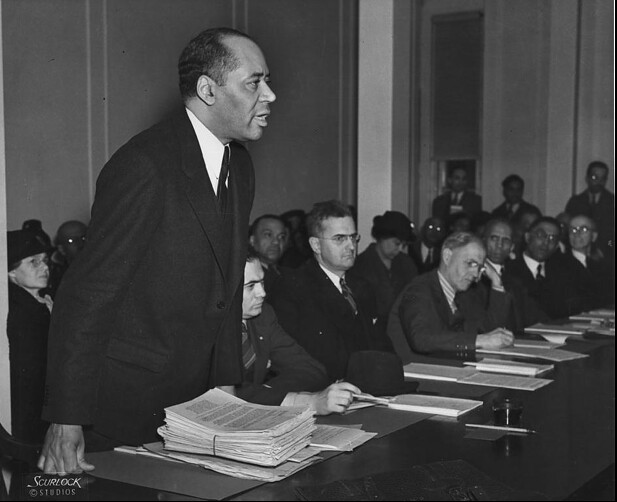
Houston delivers his argument. (Charles Hamilton Houston Institute)

The era of “Jim Crow”, a period of American history with widespread societal and legal discrimination against African-Americans (especially in the South), is generally considered to have ended with the Civil Rights Movement in the 1960s. Famous leaders from this period, such as Dr. Martin Luther King Jr., Malcolm X, and others are widely celebrated, since their actions took place at the climax of the movement. Less appreciated, however, are the many leaders who paved the way for this celebrated generation of activists, many of whom, including the subject of today’s article, never lived to see the fruits of their labor.

Charles Hamilton Houston was born in 1895 to middle-class African-American family in Washington D.C. Houston’s father, William, was an attorney. Houston was described as a brilliant child, graduating from Dunbar High School at the age of 15. He then went on to Amherst College in Massachusetts, where he left as one of six valedictorians in his class. Following a brief stint teaching English at Howard University, Houston applied as an officer to the United States Army upon the country’s entry into World War I. This was a formative experience for the young Houston, who witnessed the constant bigotry and racism that was present in a still segregated army. Using the law, he was determined to right the wrongs he saw everywhere. Houston returned to the United States in 1919, shortly after the war’s end. He enrolled in Harvard Law School, becoming the first African-American to serve as an editor of the Harvard Law Review, and graduated with honors in 1923. Houston was soon admitted law to District of Columbia Bar, where he would begin to practice law alongside his father. He also aided in the creation of the National Bar Association, which unlike the dominant American Bar Association, recognized and accredited African-American attorneys.

Beginning in 1924, Houston returned to Howard University, only this time teaching law instead of English. Mordecai Johnson, the university’s president, saw potential and Houston, and allowed him a significant role in reforming Howard Law School. Although it was responsible for training three fourths of the country’s Black lawyers, Howard Law School still only held part-time night classes. After Houston was appointed vice-dean (effectively with the powers of a dean) of the law school in 1929, he helped bring about its transition into a full-time law school. With his new role as the head of the African-American law’s central institution, Houston envisioned a new generation of Black lawyers who could use their skills for the advancement of their people. Among his students were James Nabrit, Oliver Hill, Spottswood Robinson, and Thurgood Marshall. Houston’s role in fighting Jim Crow, however, was not limited to the classrooms of Howard University. Rather, by working with the attorneys he trained himself at Howard, Houston was able to make considerable strides towards racial equality under the law.

Resigning from his post at Howard in 1935, Houston would spend the remainder of his life working on civil rights law. He assumed the position as the first special council to the National Association for the Advancement of Colored People (NAACP). One of his first cases following his departure from Howard was in Hollins v. State of Oklahoma, which concerned a Black man sentenced to death by an all white jury. Houston and his all-black defense team were able to prevent the man from being executed. Though it was a goal of Houston to rid American juries, it would be decades before that become a reality. Another of Houston’s primary concerns was the segregation of public schools, which was deemed constitutional by the 1897 Supreme Court case Plessy v. Ferguson, under the doctrine of “separate but equal”. He would dedicate much of his work towards attacking this doctrine, which he believed was the keystone for much of Jim Crow’s stranglehold on the South. Alongside Thurgood Marshall and the Baltimore branch of the NAACP, Houston argued in Murray v. Pearson before the Maryland Court of Appeals. The case concerned Donald Gaines Murray, an applicant to the University of Maryland School of Law who was rejected due to his race. The court ruled in Murray’s favor, and ordered the school to admit Murray. This ruling, however, did not mean the end of segregation in America’s, or even in Maryland’s schools. The court noted that only because the University of Maryland School of Law was the only law school in the state, did the Equal Protection Clause of the Fourteenth Amendment apply. In theory, a separate Black-only law school could legally exist in Maryland. Nonetheless, this was heralded as a victory for Houston and his devoted followers.

The precedent of outlawing segregation in institutions which were the only of its kind within its state was carried on to the federal level, thanks to Houston’s work in Missouri ex rel. Gaines v. Canada. This case was very similar in background to Murray, with the added impact that it started to raise doubt within the Supreme Court of the United States about the legitimacy of “separate but equal”. Still, however, the doctrine remained as the official legal precedent in American law. Concurrent with his struggle towards desegregating American schools was Houston’s battle towards racist housing covenants. These were legally binding contracts attached to properties that restricted who could purchase it, which often meant discrimination against prospective Black homeowners. Using these covenants, real estate developers could directly control the demographics of the neighborhoods they built. In 1948 the Supreme Court ruled in Shelley v. Kramer that the enforcement of these covenants by state or local authorities was unconstitutional, thus ending a decades-long battle by Houston and the NAACP. Though Houston himself did not argue before the court, his advice and connections to the Howard Law School alumni who did, are another example of Houston’s vital role in dismantling Jim Crow on multiple fronts.

Charles Hamilton Houston died of a heart attack on April 22, 1950, at the age of 54. Just four years after his death came the landmark decision Brown v. Board of Education, which successfully overruled the doctrine of “separate but equal”. The case was headed by the director-counsel of the newly established NAACP Legal Defense Fund, and one of Houston’s most loyal disciples, Thurgood Marshall. In 1967, Marshall would be appointed by Lyndon B. Johnson as the first African-American justice to serve on the Supreme Court of the United States.

We owe it all to Charlie.

– Thurgood Marshall

Discrimination Against Afro-textured Hairstyles

Rock musician and pop culture icon Chuck Berry in 1958, sporting the “conk” hairstyle popular with many African-American men at the time. (NPR)

Caused by the uniquely flat shape of the follicle, Afro-textured hair is nearly universal in ethnic groups across the African continent, and can also be found among certain peoples in the South Pacific and Oceania. It is thought that the curly shape is an adaptation to hot climates, since it allows for a better dissipation of heat, as opposed to straight hair which is better at retaining heat. Though there is no true consensus on the origins of the hair’s unique characteristics, the societal significance of Afro-textured hair is very clear. Discrimination against hairstyles natural to African-Americans has been of particular concern in recent years, but the practice has existed since the very beginning of the African diaspora in North America.

The various tribes of West Africa, the place of origin of the vast majority of African-Americans, had varying traditions and customs associated with one’s hair. Long, intricate braided hairstyles were often used to denote wealth or status within the tribe, and could be a source of pride for an individual. Not unlike other cultures, the more ornate one’s hairstyle, the important that person likely was. However, after the capture and forced relocation of millions of West Africans during the Transatlantic Slave Trade, male slaves would often have their hair shaven by their new European masters. In addition to being a remedy to the terribly unsanitary conditions endured by the slaves, the shaving of Black hair was meant to remove their individual identity, as well as their cultural one. Female slaves would sometimes also have their head shaven, especially those who were employed in outdoor work. These female field slaves commonly used headwraps to protect against the harsh sunlight, a garment that even became mandatory in some jurisdictions or plantations. Discrimination and regulation of Black hair became just one of many tools employed by slaveowners to remove the slave’s identity, and to reduce him or her to mere property rather than an individual.

After the Civil War and the emancipation of slaves in 1865, Afro-textured hair, like many aspects of African-American life, continued to face discrimination long after the chains had been broken. Minstrel shows, a common form of entertainment in America both before and after emancipation, typically featured a white actor donning blackface and an Afro-textured wig. These shows featured songs, plays, sketches, or other acts which caricaturized those of African descent. Jokes made at the expense of Afro-textured hair was among the several ways in which minstrel shows or racist popular entertainment could portray Black Americans as strange, inferior, or even subhuman. Beginning in the 1920s, a new hairstyle known as the “conk” became popular among male African-American leaders and public figures. The style featured an aggressive straightening of the hair, which was usually achieved through the use of a homemade hair relaxer containing lye, a substance capable of causing severe chemical burns if handled improperly. Civil rights leader Malcolm X famously denounced the hairstyle, as he believed a subservience to white society was symbolized in a desire to reject one’s natural hair texture, even at the risk of serious physical harm. Regardless, the notion of straight hair being more “proper” or “professional” continued to exist in American society through Jim Crow movement and beyond.

The rise of the Black Power and Black Pride movements in mid-20th century America prompted a widespread change in the attitudes towards Afro-textured hair in many Black circles. The increasingly popular “Afro” hairstyle became a symbol of pride in one’s heritage, and a defiance to the status quo. Public figures such as popular singer Billy Preston passively helped usher Afros into popular culture, others such as political activist Angela Davis explicitly used the hairstyle as a way of representing the struggle towards racial equality. Discrimination against hairstyles found in Black Americans, activists such as David argued, were symbolic of and fundamentally equivalent to other forms of discrimination. The Afro was perhaps the first major movement against an American beauty standard largely shaped by white culture and white individuals. Though the Afro eventually fell out of fashion, flat-tops, dreadlocks, cornrows, and a plethora of other natural hairstyles entered mainstream Black culture, thanks mainly to Black public figures who embraced them, even if they faced intense backlash from both in and outside the community.

Even decades after the initial movement towards an embracing of Afro-textured hair, it can be argued that discrimination against natural hairstyles continued to exist in schools and workplaces throughout America. These institutions typically claim a certain standard of proper dress, which, in their eyes, makes no room for certain hairstyles which embrace the individual’s natural hair texture. Rogers v. American Airlines, a federal court case in 1981, upheld a American Airlines dress code that banned the braided cornrows of one its employees, Renee Rogers. Rogers cited Title VII of the Civil Rights Act of 1964, which bans workplace or employment discrimination on the basis race, and argued that a ban on her cornrows constituted racial discrimination*. Cornrows, Rogers argued, were culturally significant to Black Americans due to its history and featuring of natural African hair texture. The United States District Court for the Southern District of New York ruled in favor of American Airlines, rejecting the cultural significance of cornrows, and asserting that because Rogers’ hair could technically be altered, it could be subject to regulation by an employer. The ruling in Rogers is now subject to much criticism and debate from modern scholars, with many seeing the court’s interpretation of Title VII as too narrow, and that it did not appropriately consider the cultural factor behind Rogers’ hairstyle.

The CROWN (Create a Respectful and Open Workplace for Natural Hair) Act was signed into law by California governor Gavin Newsom in 2019, the first act explicitly banning discrimination in any state. Similar legislation has been passed in various other states, including New York, the state in which Renee Rogers first faced bans against her hair. Louisiana, a state with a troubling history of race relations, became the first to mandate training and familiarity with Afro-textured to become a licensed barber in its state. As of August 2022 a CROWN Act at the federal level has passed through the House of Representatives, and is awaiting a vote in the Senate. This is the second time the CROWN Act was introduced to the US Congress, but a Senate vote against it in 2021 ended the bill’s first attempt at being passed into law. Though the fight against discrimination against Afro-textured hair may seem to be reaching its end, the significance of hair in shaping Black culture and American race relations will likely continue for the time being, just as it has done for generations.

*Discrimination on the basis of sex was also claimed, as the banning of cornrows was alleged to have affected neither white nor Black men.

Eugenics in America Part II: African-Americans

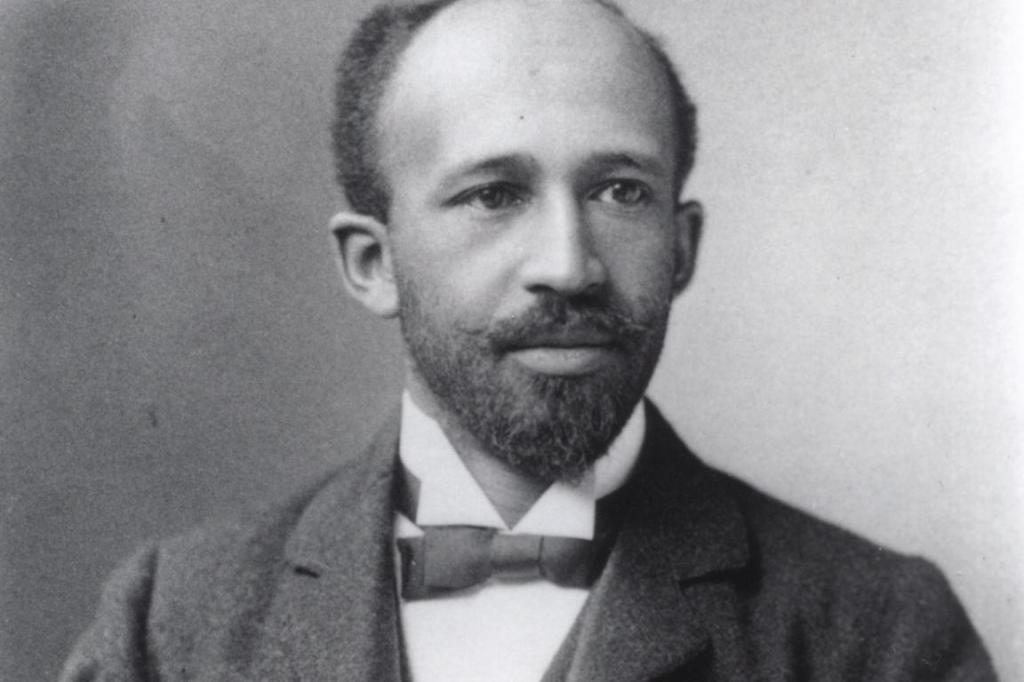
W.E.B. Du Bois, black activist and eugenics advocate (Smithsonian)

The story of eugenics in the United States and the concurrent social movements for the interests of African Americans are deeply intertwined. History has revealed that there were actually African American supporters on both sides of the eugenics argument, but usually for different reasons than their white counterparts. The relationship that black activists had with eugenics in a given time period can provide an insight into the changing goals and reasoning of the centuries-long struggle for racial justice.

As eugenics began to gain prominence in the late 19th century, some African Americans, despite the mainstream movement often labeling those of African descent as an “unfit” group, saw it as a possible way to improve their race. While some African Americans believed in protecting the racial purity of the black race (such as Marcus Garvey), or even that the black race itself was inferior (such as William Hannibal Thomas), the majority of eugenics proponents saw the ideas of “fit” and “unfit” groups as something no different from breeding cows or corn.

W.E.B. Du Bois was a leading intellectual within the black community, and strong advocate for “assimilationist eugenics”. He believed that it was the responsibility of the African American community to lift itself out of its current state, not just through social or environmental changes, but by selecting which of its members should procreate. Du Bois also claimed that the mixed-race children born to white slave owners (and the decedents of those children) were partially responsible for black moral decay by carrying the genes of perverted adulterers. He observed that similar to any other race, the black race contained individuals who possessed traits that were desirable or defective. One of Du Bois’ famous ideas was that of the “Talented Tenth” He believed that only the best of the race would be able to save the whole race. All the while, he insisted that the white and black races were equal, and that the differences alleged by contemporary white scientists were the result of class and environment rather than genetics.

Another prominent African American proponent of eugenics was Dr. Thomas Wyatt Turner. In contrast to Du Bois’ balanced emphasis on both nature and nurture, Turner doubled down on the ideas of biological determinism and the importance of one’s genetic background. He helped reshape the mainstream ideas of eugenics into one that better fit the notion of racial equality. Turner’s ideas were taught to thousands of black students at Howard, Tuskegee, and Hampton. In fact, a 1915 exam from Turner’s class at Howard University read, “Define Eugenics. Explain how society may be helped by applying eugenic laws“. In the end, Turner was hugely responsible for popularizing the eugenics both among the black elite, and the general African American population through his volunteer lectures. Years later, the NAACP, which Turner would help found, would hold baby contests (yes, baby contests) that were no doubt tied to the ideas that Turner helped spread.

While eugenics was viewed favorably by African Americans for decades, the emerging civil rights movement of the mid 20th century began to see the idea rapidly fall out of favor. Eugenics policies, such as the North Carolina Eugenics Board, which disproportionally affected African Americans were common in the United States, especially in the South. One policy of the generally progressive President Lyndon B. Johnson was the allocation of federal funding towards birth control in low income communities. Although the more radical, black nationalist faction of the civil rights movement already opposed the moderate reforms of the Johnson administration, this particular action sparked widespread outrage, since many saw it as limiting the black population as a way to suppress its influence in the United States.

The popularity of eugenics plummeted across racial communities by the 1950s and 60s, especially in response to atrocities of the Nazi regime, who adopted eugenics and Aryan superiority as a basis for its ideology. The fall of eugenics was particularly strong in the African American community, who sometimes highlighted the hypocrisy of fighting against injustice abroad when it was still being fought for at home. It was not long before eugenics was seen to be as conducive to black empowerment as lynchings or poll taxes were.