
Operation Wetback

Migrants in El Centro, CA await deportation (LA Times Archive)

Mexican immigration to America has been significant to the history of both countries ever since they have shared a border. The continued flow of Mexican migrants have been with met a multitude of laws, policies, or doctrines from the United States over the years, each of which represent, to some extent, the broader social and political conditions of the time.

In the decades leading up to the Second World War, hundreds of thousands of Mexican immigrants entered the United States both legally and illegally, primarily to work on farms in the rural Southwest. Their diasporic communities formed and grew quickly, creating a new generation of Mexican Americans. By the outbreak of the war, the American government was in need of cheap labor to fuel the war effort, both from the increase in demand for manufactured and agricultural goods, and the removal of millions of young men from the traditional workforce who instead served overseas. In response, the governments of the US and Mexico struck a deal known as the Bracero program, which allowed more Mexican laborers to enter the States on short term contracts. The program eventually brought over four million braceros.

Despite the program, illegal immigrants continue to flow into the country, much to the concern of the United States. Under the Eisenhower administration in 1954, a series of deportations would be authorized under the name Operation Wetback. U.S. Border Patrol agents began mass sweeps across the country. Hundreds of thousands of Mexicans, some of whom were American citizens, were packed into trucks, boats, or planes, and shipped back to Mexico. Stuck in a place they were not familiar with, with no guarantee of jobs, food, water, or shelter, they had to rebuild their lives from scratch. While the federal government boasted that it had successfully deported over a million illegal immigrants in just a few months, the number is likely lower due to the fact that many of those deported returned to the United States several times, only to be deported once more.

Operation Wetback was, overall, a failure. Both the Bracero program and illegal immigration far outlived any consequences that came a result of the operation, other than the continuing legacy of anti-Mexican sentiments in the United States. In fact, the sudden deportation of such a large number of Mexican laborers increased an already high demand for cheap labor, thus also increasing illegal immigration to the United States as whole. It is also important to note the operation’s name, “wetback”. Today it is known as a highly offensive slur towards Mexican Americans, further tarnishing the operation’s legacy.

The operation reentered the minds of mainstream America during the 2016 Republican Presidential primaries, when eventual winner Donald Trump used the operation both as precedent, and as an example for the feasibility of his proposed immigration policy, which included the mass deportation of the millions of illegal immigrants currently living in the United States.
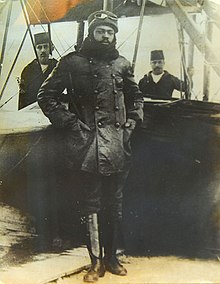
Afro-Turks

Ahmet Ali Çelikten, the first Black pilot in world history, who served in the Ottoman Air Force during WW1 (Wikimedia Commons)

Many of our readers will be well aware of the Atlantic Slave Trade, in which the colonial powers of Western Europe imported West African slaves to their territories in the Americas. They will also be aware of the massive diaspora of persons of African descent in these places as a direct result of this. From communities who are minorities within their respective countries, such as African-Americans or Afro-Brazilians, to countries which are majority Black African such as Jamaica or Haiti, these groups exist under a shared national and racial identity, despite the unfortunate circumstances of their ancestors.

A lesser known, but still strong African diaspora can be found on the western coasts of Turkey: the decedents of those brought to the country through the Ottoman slave trade. As a result of bans on the enslavement of Muslims, Jews, or Christians (people deemed more favorable in the predominately Muslim empire), the eastern African coasts became a popular place to import slaves from. While the sheer volume of slaves imported certainly did not much that of the aforementioned Atlantic slave trade, it is estimated that the total number of people taken from Africa is in the hundreds of thousands, possibly over a million*. These slaves, not unlike their counterparts from around the world, were employed in a variety of roles, including domestic work in their master’s homes, agricultural work on plantations, or serving in the Ottoman military. Sexual slavery was also quite common, as was general abuse towards slaves and those of African descent.

In the decades following the collapse of the Ottoman Empire and the ban on slavery in its succeeding countries, the struggles of the Afro-Turk continues. Racism against Afro-Turks have drawn a line in the sand between them and the rest of turkey, and consequently caused many Afro-Turks to question their identity of who they are, and where they came from.

Via Alev Scott of the BBC (2016)

Afro Turks are nominally Muslim, with nothing to differentiate them from most Turks apart from an evidently different ethnic makeup. But as a prejudiced ethnic minority, they have tried over the generations to integrate as much as possible.

Many parallels can be drawn between the experiences of Afro-Turks and those of the more well-known African diasporic communities in the West. By examining the common themes of the many varying diasporas from around the world, we can begin to examine what it means to belong to a nationality, race, culture, or people.

*does not include Ottoman slaves previously taken from other parts of the world, such as the famed Janissaries.

Los Angeles Chinese Massacre of 1871

Bodies of massacre victims (LAPL)

Ignorance. Violence. Lynchings. Death. These are all ideas deeply scarred into the minds of the American public, especially when thinking of the racial violence that plagued the country following the Civil War. While such violence is most commonly associated with discrimination against African-Americans in the South, the causes, consequences, or even existence of racial violence against other racial and ethnic minorities in the United States may be unfamiliar to the general public. The Los Angeles Chinese Massacre of 1871 is an event unfortunately forgotten by popular history, that provides a sobering view into the struggles of American immigrants who came to the country during a time where nativist and racist sentiments were pervasive in society.

By the 1870s, there was a small, but growing population of Chinese-Americans residing almost exclusively on the West Coast. The California Gold Rush, as well as jobs in the mining and railroad sectors provided the prospect of economic prosperity to what would become a community of hundreds of thousands of migrants and their descendants. However, in 1871 Los Angeles, the local Chinese population could barely be considered a community at all, with less than 200 people, most which were men staying temporarily for work. Despite their small presence, the white population of LA held many of the same resentments towards the Chinese as the rest of the American public did, usually stemming from accusations that the migrants were taking their jobs, lowering their wages, and generally undermining the work of white labor unions.

With resentment brewing for years, the accidental death of a rancher was all it took for the tension to boil over into all-out violence and destruction. After Robert Thompson was caught in the crossfire of an incident allegedly involving two Chinese gangs, a mob of livid Angelenos quickly formed, obviously looking for blood. The mob, consisting of both whites and Mexicans, easily numbering in the hundreds, ravaged the city’s tiny Chinatown, looting and burning businesses and homes, and killing any Chinese that crossed their path.

Via Cecilia Rasmussen of the Los Angeles Times (1999):

One by one, more victims were hauled from their hiding places, kicked, beaten, stabbed, shot and tortured by their captors. Some were dragged through the streets with ropes around their necks and hanged from a wooden awning over a sidewalk, a covered wagon or the crossbeam of a corral gate. Finally, 15 corpses — including those of a 14-year-old boy and the Chinese community’s only physician, Chee Long Tong — dangled in the City of the Angels. Four others died from gunshot wounds, bringing the death toll at the hands of the mob to 19 — 10% of the city’s tiny Chinese population.

The Los Angeles Chinese massacre of 1871 is considered to be the largest mass lynching in American history. Eight rioters were convicted of manslaughter, but would all be released after appealing the decision. As disturbing a tale as it is, the massacre provides insight to both larger issues of xenophobia and anti-immigrant views during the time, as well as to present concerns about violence and prejudice towards Asian-Americans as a result of the COVID-19 pandemic. More recent incidents such as the murder of Vincent Chin or the Atlanta spa shootings demonstrate that the ignorant ideas that cause violence not only continue to exist, but that they continue to have deadly consequences.

As a result of recent events, the issues faced by many Asian-Americans have been put well into public view. However, the long and troubling history behind those issues is more difficult to discuss, and therefore seldom is. But by maintaining a productive, open, and understanding dialogue about the uncomfortable topics from the past, we can come closer to finding solutions to problems of the present.

Pinned post: Welcome to History for Empathy!

History for Empathy is an online history blog and social media group dedicated towards informing readers of lesser known historical events and figures with the purpose of broadening the perspectives of the general public, and strengthen the connections between people across the world.

History for Empathy primarily produces written content, but is willing to expand into other fields for the sake of spreading its message and appealing to a wider audience.

It is the hope of HFE that through our work we are able to encourage the use of history as a way to bridge divides rather than deepen them.