
Whether he is a nomad who wanders the desert, or a city dweller who settles the fertile banks of a river, man have always been defined by the land he lives on. But just as natural environments give humanity life, their destruction can spell death for the very same. Warfare, a concept as old as humans themselves, is typically understood as being waged through the destruction of individuals. However, many of history’s military leaders have seen the value in targeting natural environments as a way to destroy or displace combatant and civilian targets.
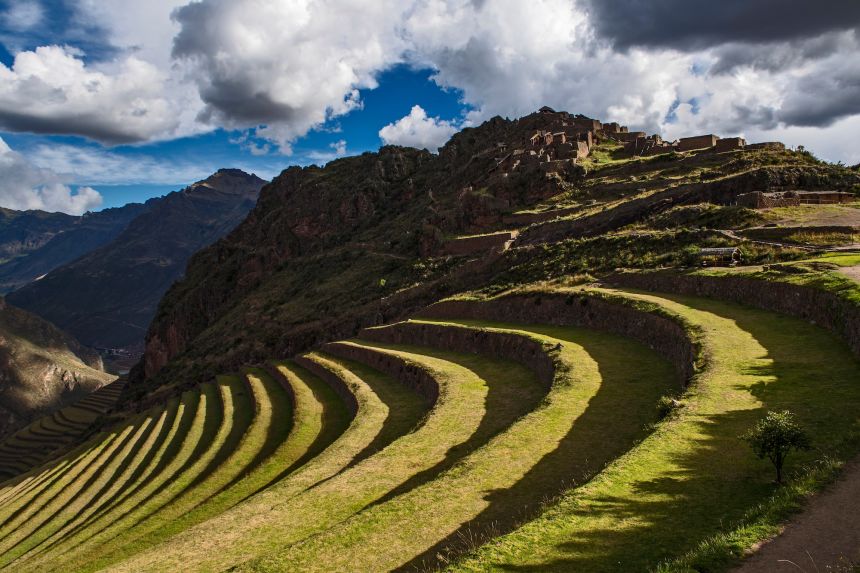
Environmental warfare has been seen throughout human history, but our first example demonstrates environmental destruction on scale which was hitherto rarely seen. America’s great pre-colonial civilizations of the Pueblo, Maya, Aztec, and Inca peoples contained environmental infrastructure as sophisticated as its Eurasian counterparts. When Spanish conquistadors first witnessed the intricate dams, dikes, and canals which sustained the livelihood of millions of indigenous Americans, they were thoroughly impressed. But as their eyes turned from admiration to the prospect of conquest, the Spaniards realized the destruction of this infrastructure meant the destruction of their new adversaries’ capacity to resist. In addition to weakening its enemies, the Spanish armies were thousands of miles from home, and thus lacked the ability to sustain itself through anything other than pillage. It therefore was doubly beneficial for Spanish conquistadors, mainly through the help of their massive cohort of indigenous allies, to destroy as much environmental infrastructure as they could. For example, during the 1521 siege of the Aztec capital of Tenochtitlan, Spanish-allied soldier’s cut the dikes surrounding the city, flooding the streets. The city’s aqueduct was also severed, leading to city’s surrender in just a few months. During Francisco Pizarro’s conquest of the Inca Empire during the 1520s and 1530s, he, just like his fellow conquistadors, sustained his army by raiding local Inca food stores. Ironically, Inca resisters used many of the same scorched earth tactics to slow the Spanish advance, by targeting imperial warehouses and generally destroying any infrastructure, whether man-made or natural, which may be useful to their colonial adversaries. Though the Spanish crown, who sought to develop their American colonies into consistent streams of income, attempted to limit the destruction done by its conquistadors due to its long-term economic consequences, the regulations it put in place did little to protect the widespread destruction of local environmental infrastructure. In the end, the destruction of indigenous American land and infrastructure proved essential for asserting Spanish dominance in the region, and forcing its many local peoples into submission.
A far more recent and controversial use of environmental warfare is seen in the United States intervention in Vietnam. The infamous “Agent Orange” was a chemical herbicide was utilized during a military operation known as Operation Ranch Hand. The goal of the operation was to destroy parts of the dense Vietnamese jungles which served as valuable hiding places for Viet Cong troops and infrastructure throughout the country. Concerns about the legality and morality of the operation were sidelined thanks to a precedent established by the British military just a decade prior, who used the exact same batch of chemicals against communist insurgents in British Malaya. Content with this fact, American planes went on to destroy 5 million acres of forest, with the operation affecting 20% of all forests in South Vietnam. Though Agent Orange is the most well-known tool of Operation Ranch Hand, it is actually part of a family of agents known as the Rainbow Herbicides–each agent named after different color of the rainbow. Agent Blue, for example, was an herbicide used to destroy rice patties deemed valuable to enemy forces. An herbicide identical to the ones still used on many American farms and lawns, it was dispersed throughout the Vietnamese countryside after burning or shelling food stores and patties was deemed inefficient. From the beginning of Operation Ranch Hand, there was significant concern and pushback from the scientific community, which was only amplified when press coverage of the war relayed such sentiments to the general public, only worsening the war’s popularity. The use of Agent Orange has received particular condemnation due to the millions of Vietnamese civilians and tens of thousands American veterans who suffered a variety of medical issues due to exposure to the substance. More common than immediate or long-term illness suffered by those directly exposed, are severe birth defects in children born from the same. The ecological and medical issues caused by Operation Ranch Hand continue to the present day, and is one of the major factors that contribute to the Vietnam War’s poor legacy in the public eye.
The destruction of the environment as a tool of war, known to some as “ecocide” or “environcide”, is not considered a crime in international law in and of itself. However, the practice often overlaps with legal definitions of crimes against humanity or crimes, especially if the act was made with the intent of causing the destruction it created. Regardless of how it is codified in international law, one can be certain that the practice of environmental warfare has, and will continue to exist so long as humans settle conflicts with violence and war.
 History for Empathy